
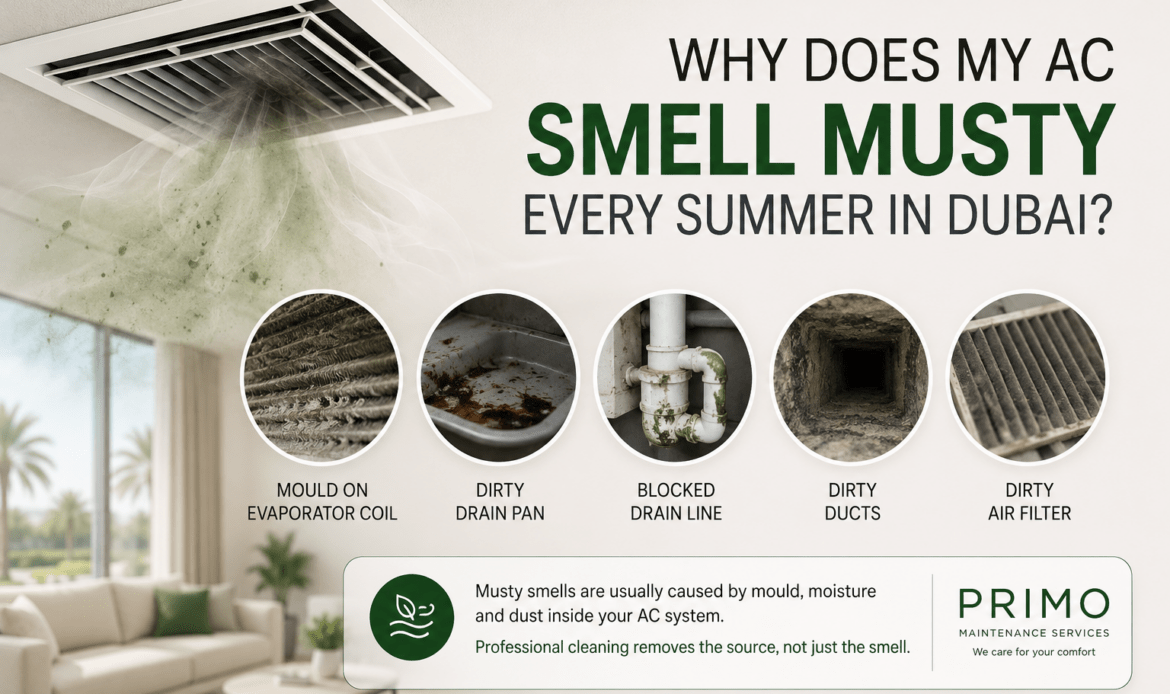
When an air conditioner starts releasing a damp or musty odour every summer, the smell usually comes from moisture and organic buildup somewhere inside the system. In Dubai, long cooling hours, humid outdoor air, condensation, and fine dust create conditions where odours can develop around coils, drain components, filters, or ductwork.
The correct solution depends on where the smell starts. A filter change may solve a minor issue, while persistent odours can require coil cleaning, drain-line attention, duct inspection, or a broader HVAC assessment. This guide explains how to narrow down the source without masking the problem with perfume or chemical sprays.
Quick smell check
If the smell is strongest for the first few minutes after startup, inspect the filter, evaporator coil, and drain area first. If it continues from several vents, the cause may involve the shared air path or ductwork. A burning, electrical, or gas-like smell is not a musty-smell issue: switch the system off and arrange an appropriate safety inspection.
Why Your AC Smells Worse During Dubai Summer
A musty AC smell is often more noticeable during Dubai’s hottest and most humid months because the cooling system runs for longer periods. Warm air passes across a cold evaporator coil, moisture condenses, and the drainage system must continuously carry that water away. When moisture remains on dust or debris, stale odours can develop.
High humidity
Humidity increases the amount of condensation produced by the indoor unit. This does not automatically mean that the AC has a fault, but it gives damp residue more opportunity to collect if the coil, drain pan, or drain line is dirty.
Constant AC operation
Villas, apartments, and offices may run cooling for most of the day in summer. Continuous operation moves more air and dust through the filter and across the coil. It can also make an existing smell easier to notice because the odour is repeatedly distributed through occupied rooms.
Condensation and limited drying time
Parts of the indoor unit can stay damp between cooling cycles. A correctly draining system manages this moisture, but a dirty pan, slow drain, or heavily contaminated coil may remain wet for longer than it should.
Fine dust accumulation
Dubai dust enters properties through doors, windows, balconies, fresh-air systems, and normal daily movement. Filters catch part of it, but neglected filters and long service intervals allow more material to collect within the AC system.
Most Common Causes of a Musty AC Smell
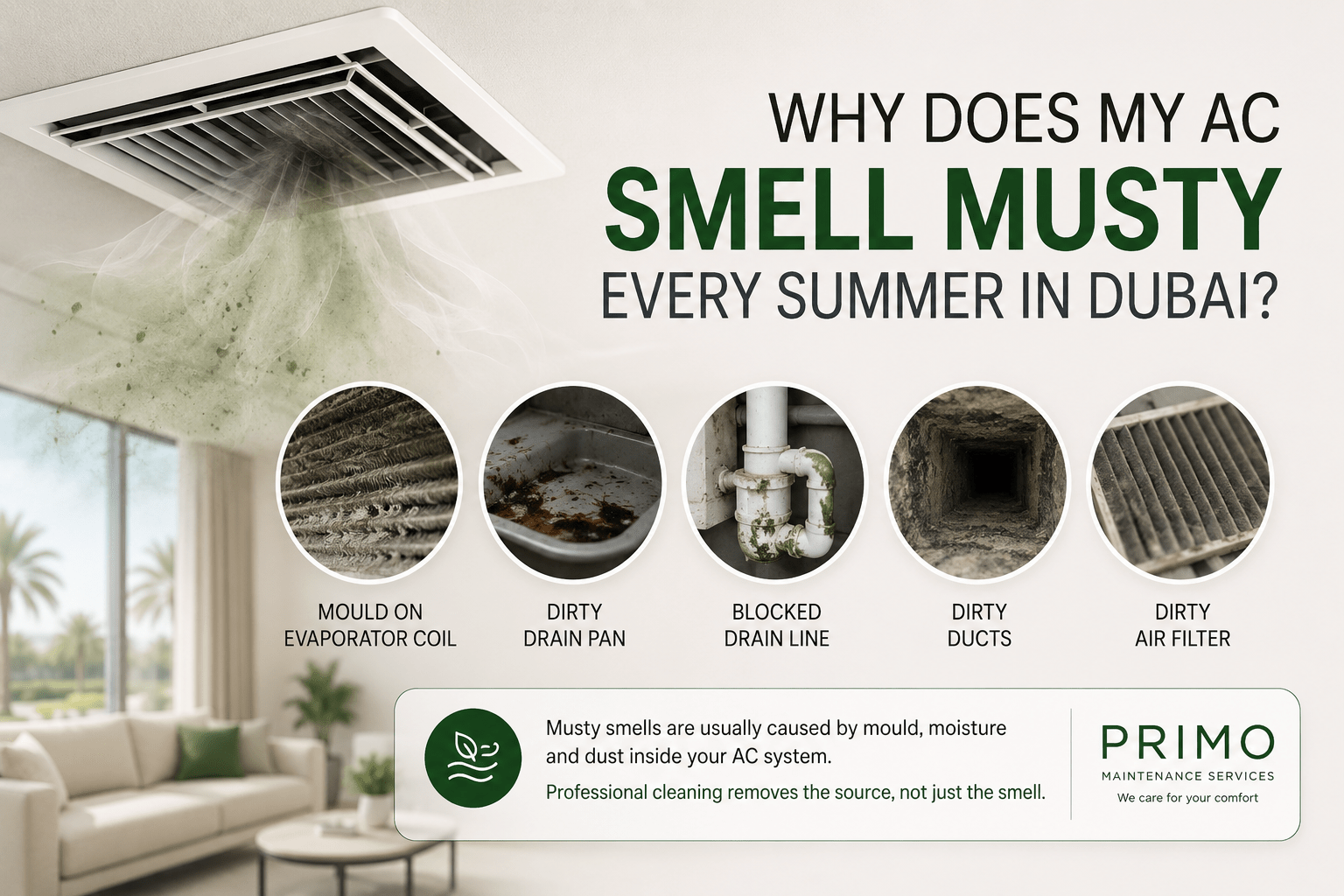
Mould or mildew buildup on the evaporator coil
The evaporator coil is cold and regularly wet with condensation. Dust adhering to its fins can hold moisture and create a stale, mouldy smell. Other signs may include reduced cooling, longer operating cycles, or an odour that is strongest immediately after the AC starts. When inspection confirms coil contamination, professional AC coil cleaning addresses the component where heat exchange and condensation occur.
A dirty AC drain pan
The drain pan collects water beneath the coil before it leaves through the condensate line. Dust, residue, and standing water in the pan can produce a damp smell. In ceiling-concealed units, the pan may not be visible without opening the access area.
A blocked or slow condensate drain
A partially blocked drain can allow water to remain in the unit. You may notice intermittent dripping, water marks near the ceiling, or a smell that returns shortly after cleaning accessible vents. If you also notice visible dripping, read our guide to why water leaks from an AC in Dubai. Drain problems should be checked before water reaches ceilings, cabinetry, or nearby finishes.
Dust and debris inside ductwork
Ducts are not automatically the cause of every odour. However, accumulated dust, moisture intrusion, contaminated insulation, or debris near supply and return paths can carry a musty smell into more than one room. An inspection can establish whether AC duct cleaning in Dubai is relevant instead of assuming that the coil is the only source.
A dirty or damp air filter
A clogged filter can hold dust and odours while restricting airflow. If a washable filter is reinstalled before it is fully dry, it may also release a damp smell. Filters are the simplest item to check and should be replaced or cleaned according to the unit and manufacturer’s guidance.
Stagnant water
Water can collect around a drain pan, condensate pump, poorly sloped pipe, or nearby service area. If the smell persists when the AC is off, the source may be standing water near the unit rather than inside the ducts.
Dead pests or nesting debris
This is less common, but a strong unpleasant odour from one grille or service void can sometimes come from a pest rather than microbial buildup. The smell may be sharper than a normal damp odour and may remain even when cooling is not running. The affected area should be inspected and cleaned appropriately.
Cause, Symptoms, and Recommended Solution
| Cause | Common symptoms | Recommended solution |
|---|---|---|
| Dirty evaporator coil | Musty smell at startup, weak cooling, damp indoor-unit area | Coil inspection and cleaning when buildup is confirmed |
| Dirty drain pan or slow drain | Stale-water smell, dripping, water marks, recurring dampness | Clean the pan and clear or assess the condensate drain |
| Dirty filter | Dusty smell, reduced airflow, visibly clogged filter | Replace or correctly clean and dry the filter |
| Duct contamination | Odour from several vents, visible debris, smell across multiple rooms | Duct inspection followed by cleaning only where required |
| Airflow imbalance | Stuffy rooms, uneven airflow, humidity or odour concentrated in one area | Airflow testing and balancing assessment |
| Standing water near the unit | Odour remains when AC is off, damp service area | Find and remove the moisture source, then inspect drainage |
How to Identify Where the Smell Is Coming From
The smell appears only when the AC starts
A short burst of musty air at startup often points toward residue on the coil, filter, drain pan, or nearby internal surfaces. Note whether the smell fades after a few minutes and whether cooling performance has changed.
The smell remains all the time
If the room smells damp even while the AC is off, inspect for water near the unit, ceiling stains, damp walls, wet insulation, or another moisture source in the room. The AC may be distributing an odour that originates elsewhere.
The smell comes from one room only
A single affected room may have a local supply branch, grille, FCU, drain issue, or nearby moisture source. This is especially relevant in villas and larger apartments where rooms may use separate indoor units.
The smell is strongest near the return grille
The return grille draws room air back into the system. The return path can pull air across a dirty filter, dust around the grille, or a nearby odour source and then redistribute the smell. Clean the accessible grille and check the filter before assuming the entire duct system is contaminated.
Burning smell versus musty smell
A musty smell is usually damp, earthy, or stale. A burning smell can indicate overheating, electrical insulation, or another mechanical issue. Do not treat it with cleaning sprays. Switch off the system and arrange an appropriate technical inspection.
Can You Fix a Musty AC Smell Yourself?
Homeowners and tenants can safely carry out a few basic checks, provided the unit is accessible and the manufacturer’s instructions are followed:
- Replace a disposable filter or clean a washable filter, then allow it to dry completely before reinstalling it.
- Wipe accessible supply and return grilles with a clean, slightly damp cloth.
- Look for standing water, ceiling marks, or visible dripping around the indoor unit.
- Keep furniture, curtains, and stored items away from return-air openings.
- Record when the smell appears and which rooms or vents are affected.
Do not spray perfume, bleach, disinfectant, or aerosol cleaner into the return grille or vents. Fragrance can temporarily cover the odour without removing the moisture or buildup that causes it. Unsuitable chemicals may also damage surfaces, coil coatings, or filters and affect indoor air.
When Professional Cleaning Is Needed
Professional help makes sense when the smell returns after a filter change, water is visible, cooling has weakened, or you cannot safely access the source. Choose the service according to the inspection findings.
AC coil cleaning
Coil cleaning is appropriate when contamination is present on the evaporator coil or nearby indoor-unit components. It focuses on the surface where cooling and condensation occur. It does not automatically clean the full duct system.
AC duct cleaning
Duct cleaning may be appropriate when dust or debris is visible inside the air path, an odour is distributed through several vents, or inspection identifies contamination within the ductwork. Duct cleaning alone will not solve a dirty coil, blocked drain, or standing-water problem.
Drain-line cleaning
A slow or blocked condensate drain requires attention to restore water flow and reduce the risk of overflow. The drain pan and surrounding area should also be checked because clearing the pipe without cleaning accumulated residue may leave the odour source behind.
Full HVAC inspection
When symptoms overlap, a wider inspection is more useful than booking a service based on smell alone. Primo’s complete AC services pathway helps property owners identify whether the issue relates to coils, ducts, drainage, installation, or airflow.
Where one room stays humid or receives very little air, an air balancing service can assess airflow distribution. Balancing is not an odour-removal treatment, but poor airflow can contribute to stuffy rooms and uneven comfort after cleaning issues have been addressed.
How to Prevent Musty AC Smells
- Change filters regularly: frequency depends on the system, occupancy, dust exposure, pets, and property conditions.
- Keep the coil and drain area maintained: inspection can identify buildup before a strong smell develops.
- Arrange duct cleaning when evidence supports it: ducts do not need cleaning simply because a set period has passed.
- Keep condensate drains clear: investigate slow drainage, recurring ceiling marks, or water leakage early.
- Control indoor moisture: keep external doors and windows closed while cooling and address unrelated water leaks.
- Use fan-drying functions correctly: some systems provide an auto-clean or coil-dry mode. Follow the manufacturer guidance rather than running the fan in a way that increases humidity.
- Record recurring patterns: noting the room, time, and operating mode helps technicians diagnose intermittent odours.
Commercial offices should also review filter schedules, fresh-air intake conditions, drainage, and complaints by zone. A smell isolated to one meeting room may require a different investigation from an odour affecting an entire floor.
Frequently Asked Questions
Why does my AC smell musty when I first turn it on?
A startup smell commonly comes from moisture and dust around the filter, evaporator coil, drain pan, or internal air path. If it returns after a filter change, arrange an inspection of the unit.
Is a musty AC smell always caused by mould?
No. A damp smell can also come from a dirty filter, stagnant drain water, a slow condensate line, wet insulation, or another moisture source near the unit.
Can a dirty evaporator coil make the AC smell mouldy?
Yes. Dust on a wet evaporator coil can hold moisture and create a stale odour. An inspection is needed to confirm the coil is the source before choosing a cleaning service.
Will AC duct cleaning remove a musty smell?
It can help when the odour source is inside contaminated ductwork. It will not solve a dirty coil, blocked drain, wet drain pan, or moisture problem elsewhere in the property.
Why does only one room smell when the AC runs?
One-room odours can relate to a local grille, duct branch, indoor unit, drain, or moisture source. Check whether that room uses a separate FCU or split unit.
Can I spray disinfectant into my AC vents?
No. Spraying perfume, bleach, or household disinfectant into vents can mask the smell without removing its cause and may affect filters, coils, finishes, or indoor air.
Can a blocked drain line cause a musty AC smell?
Yes. A slow or blocked condensate line can leave water in the drain pan or indoor unit, producing a stale-water smell and increasing the risk of leakage.
How often should AC filters be changed in Dubai?
There is no single interval for every property. Check filters regularly and follow the unit guidance, adjusting for dust exposure, occupancy, pets, renovation work, and operating hours.
Does air balancing remove AC odours?
No. Air balancing measures and adjusts airflow distribution. It can address weak or uneven airflow, but the underlying odour source must still be identified and cleaned or repaired.
When should I arrange a professional AC inspection?
Arrange an inspection when the smell persists after a filter change, returns quickly, affects several rooms, accompanies weak cooling, or appears with dripping or water marks.
Not Sure Where the AC Smell Is Coming From?
WhatsApp Primo a short video showing the AC unit, affected vent, and any visible water marks. Include your Dubai area and whether the smell affects one room or the whole property.