
Marble floors are common in Dubai villas, apartments, hotel lobbies and commercial spaces because they look elegant and stay cool underfoot. But when marble starts to show dull patches, dark marks or cloudy areas, it is not always easy to know what has actually damaged the surface.
The two most common problems are marble etching and marble staining. They may look similar at first, but they are very different types of damage. Etching affects the surface finish, while staining happens when something absorbs into the stone. Understanding the difference helps you choose the right fix and avoid making the damage worse.
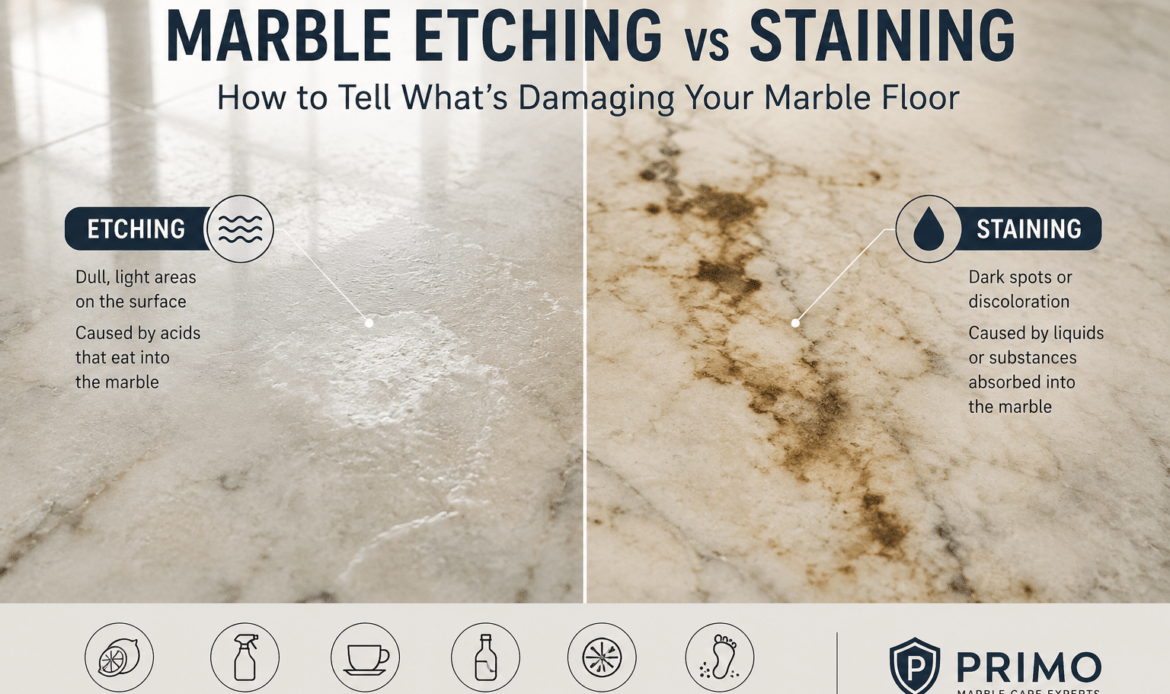
Quick answer: a dull or light mark is often etching. A darker mark that looks absorbed into the stone is more likely staining. Cleaning may remove surface dirt, but polishing or restoration is often needed when the marble finish itself has been affected.
Why Dubai Marble Floors Lose Shine
Dubai properties place marble under heavy daily use. Sand is carried indoors from shoes, balconies and entrance areas. Air conditioning runs for long periods, which can dry surfaces and spread fine dust through the property. In villas and apartments, marble floors are often exposed to food spills, bathroom cleaners, coffee, oils, hard water marks and general wear.
Over time, these conditions can make a polished marble floor look patchy. Some areas may become dull near doorways, dining spaces or bathrooms. Other marks may appear after a spill or after using the wrong cleaner. The important point is that not every mark is a stain, and not every dull patch can be fixed by stronger cleaning.
Marble is a natural calcium-based stone. It reacts differently from ceramic tiles, porcelain and granite. A cleaner that seems harmless on another surface may damage marble by attacking the polished finish. This is why marble floor damage needs to be identified carefully before deciding whether cleaning, stain treatment, honing or polishing is required.
What Is Marble Etching?
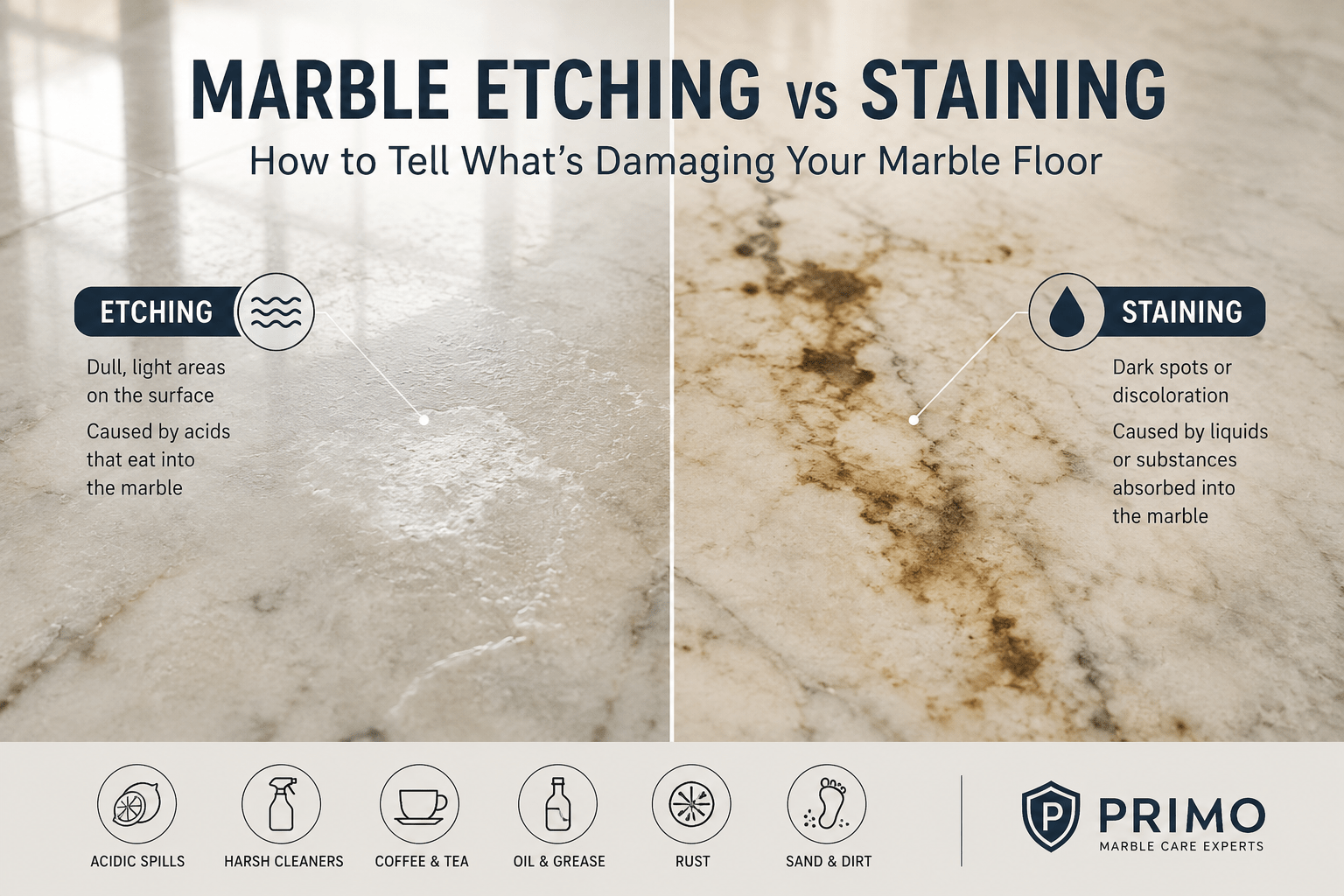
Marble etching is surface damage caused when an acidic substance reacts with the calcium carbonate in marble. The acid does not simply sit on top of the floor. It changes the surface finish and leaves a dull, light or cloudy mark where the polished layer has been affected.
Common causes of acid damage on marble include lemon juice, vinegar, acidic bathroom cleaners, toilet cleaners, descaling products, some kitchen cleaners and certain food spills. Even a small amount of acid can leave a visible mark if it stays on the surface long enough.
Etching is especially noticeable on polished marble because the damaged area reflects light differently from the surrounding surface. When you look at the floor from an angle, the mark may appear flat, hazy or whitish. It may feel slightly rougher than the surrounding polished stone.
Common signs of marble etching
- The mark looks dull, pale or cloudy.
- The surface has lost shine in one specific area.
- The mark is easier to see when light reflects across the floor.
- The affected area may feel slightly rough or flat.
- Cleaning does not restore the shine.
Etching is often mistaken for a stain because it appears after a spill. But if the mark is lighter than the marble and mainly affects shine, it is usually surface etching rather than absorbed staining.
What Is Marble Staining?
Marble staining happens when a liquid or substance absorbs into the stone and changes its colour from within. Unlike etching, a stain is not mainly about loss of shine. It is usually a darker or coloured mark caused by material entering the pores of the stone.
Marble is porous, and some types are more absorbent than others. If the floor is unsealed, poorly sealed or worn down, it can absorb spills more easily. Coffee, tea, cooking oil, cosmetics, rust, plant pot water, coloured liquids and some cleaning chemicals can leave visible stains.
In Dubai homes, stains are often found near kitchens, dining areas, bathrooms, balconies and entrances. Villas with garden access may also experience marks from soil, plant pots, metal furniture legs or outdoor moisture being walked inside.
Common signs of marble staining
- The mark looks darker than the surrounding marble.
- The colour appears absorbed rather than sitting on top.
- The stain may have a brown, yellow, grey, black or oily tone.
- The surface may still feel smooth even though the colour has changed.
- The mark may remain after normal mopping or wiping.
A stain can sometimes exist together with etching. For example, coffee or a bathroom product may both absorb into the stone and dull the polish. This is why visual inspection is important before choosing a treatment.
How to Tell the Difference: Dull Mark vs Dark Absorbed Stain
The easiest way to compare marble etching vs staining is to look at colour, shine and texture. Etching usually changes the way the surface reflects light. Staining usually changes the colour of the stone.
If the mark is dull, light and visible at an angle, it is likely etching. If the mark is dark, coloured or looks absorbed, it is more likely staining.
Simple home observation test
- Stand near the mark and look across the floor toward natural light.
- If the mark appears cloudy or matte, check whether the shine has changed.
- If the mark looks darker from every angle, check whether colour has absorbed into the stone.
- Run your fingers gently across the area. Etched marble may feel slightly rougher.
- Do not scrub aggressively or apply acidic cleaners to test the surface.
This is only a basic observation method. Some marble floors have natural veins, old repairs or uneven polishing that can make damage harder to identify. If the mark is in a highly visible area, such as a villa entrance, living room or hotel lobby, it is safer to get the surface inspected before trying strong products.
Common Causes in Dubai Homes
Marble floor damage in Dubai usually comes from a mix of daily living, climate conditions and incorrect cleaning. The same floor can have several types of damage at once, especially in busy properties.
Lemon, Vinegar and Acidic Food Spills
Lemon juice, vinegar, fruit juices and acidic sauces can quickly create dull marks on polished marble. These are common around kitchens, dining areas and serving counters.
Bathroom Cleaners and Descaling Products
Many bathroom products are too harsh for marble. Cleaners designed for ceramic tiles, glass or limescale can etch marble vanity tops, bathroom floors and shower thresholds.
Coffee, Tea and Oil
Coffee and tea can leave dark marks if they sit on marble. Cooking oil, body oils and cosmetic products may create deeper staining, especially if the marble seal has worn down.
Rust and Metal Marks
Rust can come from metal furniture legs, plant stands, bathroom accessories or wet metal items placed directly on the floor. Rust stains can be difficult to remove without the correct process.
Sand and Daily Wear
Sand acts like a fine abrasive under shoes. In Dubai villas and apartments, it can gradually wear down high-traffic marble areas, especially near entrances, corridors and balcony doors.
Wrong Cleaning Methods
Strong chemicals, rough pads and repeated wet mopping with unsuitable products can reduce the shine and leave the surface looking uneven. Marble needs a neutral cleaning approach and periodic professional maintenance when wear becomes visible.
Can Cleaning Fix Marble Etching or Staining?
Cleaning can remove surface dirt, dust, residue and some fresh spills. It can also help reveal whether a mark is sitting on the surface or has affected the stone. However, cleaning alone cannot restore a polished finish that has been etched by acid.
If the marble has a dull patch caused by etching, the surface usually needs honing or polishing to blend the finish back with the surrounding area. If the marble has an absorbed stain, the treatment depends on the type of stain, how deep it has penetrated and whether the stone is sealed.
A common mistake is to keep applying stronger cleaners when a mark does not disappear. This can make etching worse, especially if the cleaner is acidic or abrasive. Another mistake is using DIY stain removers without knowing whether the issue is actually a stain.
If your floor has widespread dullness, scratches or patchy reflection, cleaning may improve hygiene but it will not fully restore the appearance. That is when professional marble polishing in Dubai becomes the more appropriate solution.
When Polishing, Honing, or Restoration Is Needed
Marble treatment depends on the type and severity of damage. A small dull spot may only need localized honing and polishing. A floor with widespread scratches, traffic wear or uneven shine may need a larger restoration process.
Polishing
Polishing is used when the marble surface is generally level but has lost shine. It helps improve reflection and restore a cleaner finish. This is common in living rooms, corridors, hotel receptions and commercial entrances.
Honing
Honing is used when the marble needs a smoother, more even surface before polishing. It can help reduce visible dullness, light scratches and surface-level etching. Honing may produce a matte, satin or pre-polished finish depending on the process.
Restoration
Restoration is a broader process for floors with deeper wear, heavy scratches, uneven finish, lippage, old coatings or multiple damage types. It may involve grinding, honing, polishing, stain treatment and sealing depending on the floor condition.
The right approach should be selected after inspecting the marble, not guessed from a photo alone. Lighting, stone colour and natural veining can make damage look different in pictures.
How to Prevent Future Marble Damage
Marble is a premium natural stone, but it needs the right care. Prevention is usually easier and cheaper than repairing widespread damage later.
- Use pH-neutral cleaners suitable for natural stone.
- Wipe spills quickly, especially lemon, vinegar, coffee, tea and oil.
- Avoid acidic bathroom cleaners on marble floors and counters.
- Use mats near entrances to reduce sand abrasion.
- Place protective pads under metal furniture legs and plant pots.
- Do not use rough scrubbing pads on polished marble.
- Use coasters and trays on marble countertops and vanities.
- Consider sealing where the stone is absorbent or exposed to spills.
In Dubai villas and apartments, entrance areas and balcony access points often need extra attention because sand and outdoor dust are carried indoors. In hotels and commercial buildings, cleaning teams should use marble-safe products and avoid acidic chemicals in public areas.
When to Call Primo
You should call Primo if your marble floor has dull patches that do not improve after normal cleaning, dark absorbed marks, traffic wear, scratches, cloudy reflection or uneven shine. An inspection can help identify whether the problem is etching, staining, surface wear or a combination of issues.
Primo supports Dubai villas, apartments, hotels and commercial properties with marble polishing and restoration services. The goal is to recommend the right process based on the actual floor condition, not to over-treat the surface.
If the floor is part of a broader property refresh, you can also explore Primo’s property restoration services for related specialist maintenance options.
Need Help Identifying Marble Floor Damage?
Send photos of the affected marble area on WhatsApp and share your Dubai location. Primo can advise whether the issue looks like etching, staining, wear, or a surface that needs inspection.
FAQs
What is the main difference between marble etching and staining?
Marble etching is surface damage that usually appears as a dull, light or cloudy mark. Staining is absorbed discoloration that usually appears darker or coloured within the stone.
Can marble etching be cleaned off?
No. Cleaning can remove surface dirt, but etching changes the marble finish. Etched areas usually need honing or polishing to improve the shine.
Why does lemon or vinegar damage marble?
Lemon and vinegar are acidic. Marble contains calcium carbonate, which reacts with acids and can leave dull marks on the polished surface.
How do I know if a dark mark on marble is a stain?
If the mark looks darker than the surrounding stone and appears absorbed rather than dull on the surface, it is likely a stain.
Can marble stains be removed completely?
Some stains can be reduced or removed, but results depend on the stain type, depth, stone condition and how long the stain has been present.
Does polishing remove marble stains?
Polishing improves the surface shine, but it may not remove deep absorbed stains. Stain treatment may be needed before polishing in some cases.
Is sealing enough to prevent all marble damage?
Sealing can reduce absorption and help protect against some stains, but it does not stop acid etching or scratches from sand and daily wear.
When should I call a marble restoration specialist?
Call a specialist when dull patches, stains, scratches or uneven shine remain after normal cleaning, especially in visible areas of the property.