
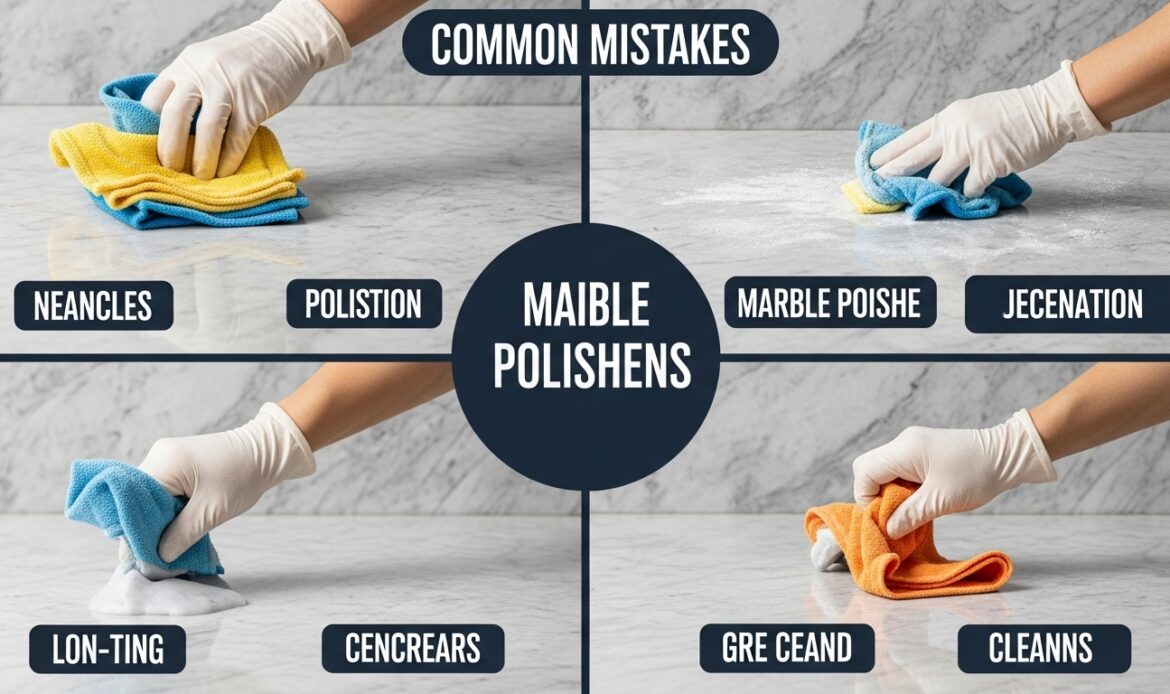
Marble is durable enough for villas, apartments, hotels and commercial interiors, but it is also chemically sensitive. Products and methods that are safe for ceramic tile, porcelain, granite or general flooring can leave marble dull, scratched or permanently etched.
This guide explains the most common marble polishing and cleaning mistakes, why they cause damage and what to do instead. It is designed to help Dubai homeowners and property managers avoid unnecessary wear before deciding whether a floor needs cleaning, maintenance, polishing or professional assessment.
Quick Mistakes Summary
| Mistake | Why It Causes Damage | Better Approach |
|---|---|---|
| Using vinegar or lemon cleaner | Acid reacts with calcium-based marble and causes etching. | Use a pH-neutral stone-safe cleaner. |
| Scrubbing with abrasive pads | Creates micro-scratches and uneven sheen. | Use soft microfibre cloths or non-abrasive pads. |
| Treating every mark as a stain | Etching, scratches and stains need different treatment. | Identify the mark before applying products. |
| DIY polishing deep scratches | Polishing cannot level deep damage by itself. | Assess whether honing, grinding or repair is needed. |
| Applying sealer to fix damage | Sealer does not remove scratches, etching or dullness. | Use sealer only when it is suitable for protection. |
| Mopping before removing sand | Sand becomes abrasive under a mop or shoes. | Dry dust or vacuum before damp mopping. |
Using Vinegar, Lemon or Acidic Cleaners
Marble is mainly calcium-based, which means acidic products can react with the surface. Vinegar, lemon juice, bathroom descalers and some “natural” cleaners may be useful elsewhere, but they can leave dull, light marks on marble.
These dull marks are often etching, not dirt. Repeated cleaning will not remove etching because the surface itself has been chemically affected.
If you are not sure whether a mark is an etch or an absorbed stain, read the guide to marble etching versus staining before applying stronger cleaners.
Using Abrasive Pads, Powders or Harsh Brushes
Kitchen scrubbers, bathroom pads and abrasive powders can create fine scratches on polished marble. The damage may not be obvious immediately, but it can reduce reflection and create a hazy area over time.
Abrasive tools are especially risky on high-gloss marble because small scratches catch light. They can also create uneven sheen when only one patch is scrubbed aggressively.
Use soft microfibre cloths, clean dust mops and stone-safe non-abrasive pads instead. If a mark does not lift with gentle cleaning, identify it before scrubbing harder.
Treating Every Mark as a Stain
Many marble mistakes happen because every mark is treated as a stain. In reality, a floor may show several different types of damage.
| Mark Type | What It Usually Looks Like | Why Identification Matters |
|---|---|---|
| Stain | Often darker than the surrounding stone. | May need absorbent stain treatment, not polishing alone. |
| Etching | Dull, light or cloudy mark after acid exposure. | Cleaning products will not restore the etched surface. |
| Scratch | Fine lines or marks visible in sunlight. | May need honing or polishing depending on depth. |
| Surface dirt | Residue, dust or grime on top of the stone. | Usually responds to correct cleaning. |
| Moisture damage | Darkening or patchiness near wet areas. | May require drying, inspection or source correction. |
Identifying the type of mark first helps avoid wasted effort and accidental damage.
Trying to Polish Deep Scratches Without Honing or Grinding
Polishing can improve surface clarity, but it cannot level deep scratches or gouges on its own. When deeper damage remains under a polished surface, the floor can still look uneven or distorted.
Light surface marks may respond to professional polishing. Deeper scratches may need honing, controlled grinding or repair before the final polishing stage.
If you are unsure whether the floor has reached that point, compare it with the signs your marble may need professional polishing.
Using DIY Polishing Compounds Without Identifying the Stone
Not every stone sold or described as marble behaves the same way. Some floors may include travertine, limestone, terrazzo, engineered stone or marble with previous coatings.
DIY polishing compounds can create patchy results if the stone type, finish or previous treatment is unknown. They may also react differently on honed, polished or sealed surfaces.
Before applying a product across a visible area, identify the surface and test carefully in a discreet spot. If the result looks hazy, patchy or sticky, stop before extending the treatment.
Applying Sealer to Fix Existing Damage
Sealer is often misunderstood. It can help reduce absorption and make some spills easier to manage, but it does not repair damage that already exists.
- Sealer does not remove scratches.
- Sealer does not repair etching.
- Sealer does not restore shine.
- Sealer does not correct cracks, loose tiles or lippage.
For prevention and aftercare, use the guide on how to protect marble floors from stains and scratches.
Over-Polishing or Repeating Aggressive Treatment Too Often
More polishing is not always better. Marble maintenance should be condition-based, not automatic.
Repeating aggressive abrasion too often can alter the finish or remove more surface material than necessary. A lightly dull floor may only need correct cleaning or maintenance, while a heavily etched floor may need a more structured restoration process.
A professional assessment should explain the least aggressive treatment that is suitable for the condition of the floor.
Ignoring Sand and Dust Before Mopping
Dubai’s sand and fine dust can be abrasive. If grit remains on the floor during mopping, it can act like a fine sanding material across the marble surface.
Dry removal should happen before wet cleaning. Use a clean microfibre dust mop, vacuum with a soft floor attachment, and keep entry mats near doors, balconies and outdoor transitions.
Dragging Furniture or Using Unprotected Chair Legs
Furniture movement is one of the most common causes of visible scratches. Dining chairs, office chairs, sofas, coffee tables and heavy decorative items can all mark marble if they move across grit.
- Use felt pads under chair and table legs.
- Lift furniture instead of dragging it.
- Use protective runners in high-movement areas.
- Check wheels on office chairs and movable furniture.
- Clean under rugs and mats so trapped grit does not scratch the floor.
Leaving Spills on Marble for Too Long
Coffee, tea, juice, oils, cosmetics and cleaning chemicals can leave marks if they sit on marble for too long. Some spills stain, while acidic spills can etch.
Blot spills with a soft cloth instead of spreading them. After blotting, clean with a suitable pH-neutral cleaner and avoid aggressive scrubbing.
Assuming a Mirror Finish Is Always Possible
Some marble floors polish to a strong reflection, while others naturally have a softer sheen. Stone composition, porosity, density, age, previous repairs and existing wear all influence the final result.
Structural issues, loose tiles, deep cracks and poor installation cannot be polished away. Sample areas can help set realistic expectations before larger work begins.
Hiring a Provider Based Only on the Lowest Quote
A low quote is not automatically wrong, but price without scope is hard to compare. The most useful quotation explains what the company inspected, what method is proposed and what is excluded.
Compare the following before choosing a provider:
- Inspection and stone identification.
- Whether the scope includes cleaning, honing, polishing, grinding, repair or sealing.
- Protection of walls, skirting, furniture and access areas.
- Expected finish and realistic limitations.
- Exclusions, timing and aftercare advice.
For buyer-focused guidance, read Primo’s article on choosing a marble polishing company.
What to Do If Marble Has Already Been Damaged
If you used the wrong product or noticed new damage, pause before applying another treatment. Repeated cleaning, scrubbing or polishing attempts can make the issue harder to assess.
- Stop using the suspected product.
- Rinse only where appropriate and avoid soaking the floor.
- Do not repeatedly scrub the same patch.
- Photograph the damage in natural light if possible.
- Identify whether the mark is a stain, etch, scratch or crack.
- Arrange an assessment where the issue is widespread, deep or unclear.
If the floor may need professional treatment, the professional marble assessment process can help determine whether cleaning, honing, polishing or restoration is appropriate.
Marble Care Checklist
| Do | Avoid |
|---|---|
| Use pH-neutral stone-safe products. | Vinegar, lemon, descalers and acidic cleaners. |
| Use clean mops and soft cloths. | Dirty mop water or abrasive pads. |
| Remove sand before wet cleaning. | Mopping grit across the surface. |
| Use felt pads and lift furniture. | Dragging chairs, sofas or tables. |
| Blot spills quickly. | Leaving coffee, oil, cosmetics or juice on marble. |
| Inspect sealer condition periodically. | Using sealer as a repair product. |
| Request advice before aggressive treatment. | Trying repeated DIY polishing on unknown stone. |
Related Marble Guides
Frequently Asked Questions
Can vinegar damage marble?
Yes. Vinegar is acidic and can etch marble, leaving dull or light marks on the surface. Use a pH-neutral stone-safe cleaner instead.
Can baking soda scratch marble?
Baking soda can be mildly abrasive, especially if rubbed into polished marble. It may also leave residue if not removed properly, so it should not be used as a routine marble cleaner.
Can toothpaste polish marble?
No. Toothpaste is not a marble polishing system and may contain abrasives or additives that leave dull patches. Use products and methods designed for natural stone.
Can sealer repair marble etching?
No. Sealer can help reduce absorption, but it does not repair etched, scratched or dull marble. Etching affects the surface and usually needs professional assessment if visible.
Can deep scratches be polished out of marble?
Not by polishing alone. Deep scratches may require honing, grinding or repair before the marble can be polished evenly.
How should marble be cleaned daily?
Remove sand and dust first, then use a damp microfibre mop with a pH-neutral stone-safe cleaner. Avoid soaking the floor or using acidic products.
Are steam cleaners safe for marble?
Steam cleaners are not always suitable for marble, especially on sealed, older or damaged floors. Heat and moisture can create issues in sensitive areas, so check the floor condition first.
How often should marble be polished?
Marble should be polished based on condition, not a fixed schedule. High-traffic floors may need attention sooner, while well-maintained low-use areas may only need routine care.
What should I do after using the wrong cleaner on marble?
Stop using the product, avoid repeated scrubbing and take clear photos of the mark. If the surface looks dull, cloudy or etched, arrange an assessment before applying another treatment.
When should I call a professional?
Call a professional when marks do not respond to safe cleaning, scratches are visible in sunlight, etching is widespread or you are unsure whether the issue is a stain, scratch, etch or crack.
Need Help Identifying Marble Damage?
Used the wrong product or unsure whether the mark is a stain, etch or scratch? Arrange a professional marble assessment before applying another treatment.
Request Marble Damage Advice
Send photos of the affected area and describe what product or event caused the mark. Primo can guide you on the next sensible step.