
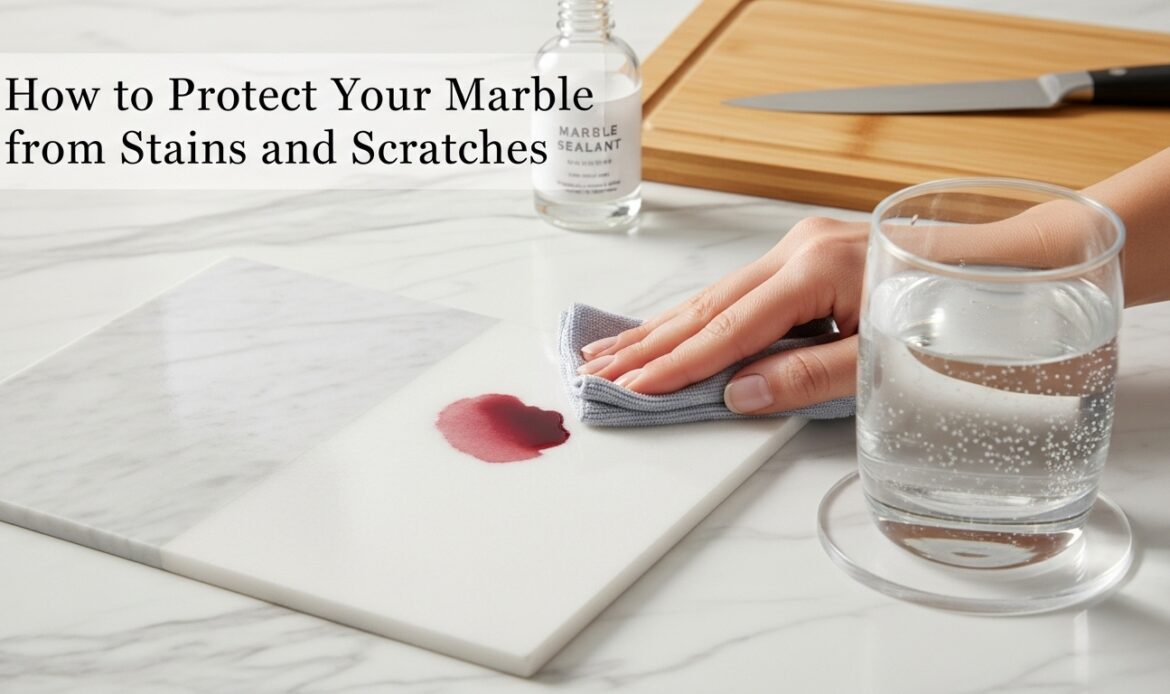
Marble floors can stay beautiful for many years, but they need the right daily care. Stains, scratches, dull patches and etching usually happen gradually, especially in Dubai homes where sand, dust, humidity and frequent indoor foot traffic all affect natural stone.
This guide explains how to protect marble floors from stains and scratches without overcomplicating maintenance. It focuses on prevention, aftercare and realistic expectations, so you can avoid common cleaning mistakes and know when a professional assessment is sensible.
Why Marble Stains and Scratches So Easily
Marble is a natural stone made mainly from calcium carbonate. That makes it elegant and workable, but it also means it can react with acidic substances and show wear when abrasive particles are dragged across the surface.
In Dubai, several everyday conditions make marble care more important:
- Fine sand brought in from shoes, balconies and outdoor areas.
- High use of air conditioning, which can move fine dust around interiors.
- Humidity in bathrooms, kitchens and entry areas.
- Frequent cleaning with products that may be too strong for natural stone.
- Furniture movement in apartments, villas, hotels and commercial spaces.
Marble protection is not about keeping the floor untouched. It is about reducing avoidable damage and maintaining the best finish the stone can realistically hold.
Daily Marble Cleaning Routine
A simple daily routine prevents most avoidable wear. The goal is to remove dust and grit before it becomes abrasive under shoes, chairs or cleaning tools.
| Daily Task | Best Practice | Why It Helps |
|---|---|---|
| Dry dusting | Use a clean microfibre dust mop. | Removes fine sand before it scratches the finish. |
| Light mopping | Use a damp mop, not a soaking wet one. | Reduces water marks and residue. |
| Cleaner choice | Use a pH-neutral stone-safe cleaner. | Avoids acid damage and dull etched marks. |
| Spill response | Blot spills immediately with a soft cloth. | Reduces the chance of staining or etching. |
| Entry protection | Use mats near entrances and balcony doors. | Limits sand and grit entering the room. |
Weekly Marble Maintenance
Weekly care should be gentle and consistent. Avoid the temptation to use stronger chemicals when the floor looks dull, because dullness may be caused by etching or surface wear rather than dirt.
- Vacuum or dust mop with a soft floor attachment.
- Mop with a stone-safe cleaner diluted according to the product instructions.
- Dry the floor with a clean microfibre cloth if water marks are visible.
- Check high-traffic areas for new dull patches or fine scratches.
- Inspect rugs, mats and furniture pads for trapped grit.
Suitable Cleaning Products for Marble Floors
The safest routine cleaner is usually a pH-neutral product designed for natural stone. It should clean without attacking the mineral surface or leaving a heavy film.
Suitable options usually include:
- pH-neutral marble or natural-stone cleaners.
- Clean water for light damp mopping.
- Soft microfibre cloths and mops.
- Non-abrasive pads designed for delicate flooring.
Always test new cleaning products in a discreet area first, especially on honed, older or heavily used marble.
Products to Avoid on Marble
Many household cleaners are too aggressive for marble. They may clean the surface, but they can also leave dull marks, remove shine or weaken the protective finish.
| Product or Tool | Why to Avoid It |
|---|---|
| Vinegar or lemon cleaners | Acids can etch marble and create dull, light marks. |
| Bathroom descalers | Often acidic and unsuitable for calcium-based stone. |
| Bleach-heavy cleaners | Can affect finishes and may leave residue when misused. |
| Abrasive powders | Can scratch or haze polished marble. |
| Hard scrubbing pads | Can create visible swirl marks or dull patches. |
| Generic floor polish | May leave coatings that trap dirt or interfere with later restoration. |
If you already have dull light marks from acidic products, read Primo’s guide to marble etching versus staining before trying more cleaners.
How to Prevent Marble Stains
Stains happen when a substance absorbs into the stone or into tiny openings in the surface. Marble porosity varies, so two floors may react differently to the same spill.
Food and Drink Spills
Coffee, tea, oil, juice, sauces and coloured drinks should be blotted quickly. Avoid wiping aggressively, because that can spread the liquid across a larger area.
Oil and Grease
Oil can leave dark marks if it sits long enough to absorb. Kitchens and dining areas benefit from mats in predictable spill zones, especially near preparation counters.
Rust and Metal Marks
Metal plant stands, wet furniture legs and decorative items can leave rust marks. Use protective pads and avoid leaving damp metal directly on marble.
Bathroom Products
Shampoos, cosmetics, soaps and descaling cleaners can mark marble in bathrooms. Keep products on trays and avoid spraying cleaners directly onto stone surfaces.
How to Prevent Marble Scratches
Most everyday scratches come from abrasive particles or movement across the surface. Sand is one of the biggest issues in Dubai because it can enter through shoes, balconies and outdoor seating areas.
- Use entry mats at main doors, garden doors and balcony access points.
- Add felt pads under chair legs, tables, sofas and movable furniture.
- Lift furniture instead of dragging it.
- Keep pet nails trimmed where practical.
- Use rugs in high-traffic walkways, but clean under them regularly.
- Choose soft wheels for movable furniture where possible.
If scratches are already visible in sunlight, compare them with the signs your marble floor needs polishing. Light surface scratches may be improved with professional honing and polishing, but deeper damage may need more detailed restoration.
Rugs, Mats and Furniture Protection
Rugs and mats are useful, but they must be chosen carefully. Rubber-backed mats can sometimes trap moisture or mark sensitive stone finishes, so breathable, non-staining backing is safer.
Furniture pads should be checked regularly. A worn felt pad can trap grit and become abrasive, especially under dining chairs and office chairs.
Pet Considerations for Marble Floors
Pets can affect marble through tracked-in sand, nail marks, water bowls and occasional accidents. The best prevention is simple: clean quickly, dry the area and avoid harsh odour-removal chemicals unless they are stone-safe.
Place mats under food and water bowls. If a stain or dull patch appears, avoid aggressive scrubbing and check whether the issue is a stain, etch mark or surface scratch.
Bathrooms, Kitchens and Outdoor Marble
Bathrooms
Bathroom marble needs careful cleaner selection because descalers and acid-based products are common. Keep surfaces dry where possible and avoid letting soap residue build up in corners.
Kitchens
Kitchen marble is more exposed to oils, food acids and dropped utensils. Use trays, mats and quick spill response rather than relying only on sealing.
Outdoor Marble
Outdoor marble or semi-outdoor marble near balconies may face more sand, UV exposure and moisture. It may need more frequent cleaning and inspection than interior marble.
Sealing Marble Floors
Sealing can help reduce absorption and make some stains easier to manage, but it is not a shield against every problem. It does not repair scratches, remove etching or create gloss.
Whether sealing is needed depends on the stone type, finish, use of the area and previous treatment. Some polished marble may need less frequent sealing than more porous stone, while honed or high-use areas may need closer monitoring.
How Often Should Sealing Be Checked?
Sealer condition should be checked periodically rather than assumed. Homes, villas, hotel bathrooms, kitchen areas and commercial entrances may wear differently, so the right schedule depends on use and exposure.
What Sealing Can and Cannot Do
| Sealing Can Help With | Sealing Cannot Fix |
|---|---|
| Reducing absorption of some liquids. | Existing scratches or etch marks. |
| Giving more time to clean spills. | Cracks, loose tiles or structural issues. |
| Supporting easier routine maintenance. | Dullness caused by surface wear. |
| Protecting porous areas when suitable. | Acid damage from vinegar, lemon or descalers. |
Preventing Etching, Scratches and Dullness
Etching, scratching and dullness are often confused, but they are different problems. Etching is chemical surface damage, scratching is mechanical wear, and dullness can come from either repeated abrasion or incorrect cleaning.
- Prevent etching by keeping acidic cleaners and food spills away from marble.
- Prevent scratches by controlling sand, grit and furniture movement.
- Prevent dullness by using gentle products and maintaining a consistent cleaning routine.
If the floor has already lost shine, the commercial marble polishing service page explains how professional assessment and polishing work. This maintenance guide is intended to help reduce avoidable damage before and after that type of service.
Maintenance After Professional Polishing
After professional polishing, the first few weeks matter. Avoid harsh products, keep abrasive sand away from the floor and follow any aftercare guidance provided by the technician.
Good aftercare usually includes:
- Using only pH-neutral cleaning products.
- Keeping mats clean and dry.
- Cleaning spills promptly.
- Avoiding dragged furniture.
- Checking high-traffic paths for early dullness.
- Scheduling inspection when wear becomes visible, rather than waiting for severe damage.
If you are planning work and need to understand disruption, read the guide on how long marble polishing takes.
Apartment, Villa, Hotel and Commercial Marble Care
Apartments
Apartments often have marble in living rooms, corridors, bathrooms and entrance areas. Regular dust control is especially important near balconies, lift lobbies and main doors.
Villas
Villas may have larger marble areas, staircases, outdoor transitions and multiple stone types. Mats, furniture pads and routine dust removal usually make the biggest difference.
Hotels and Commercial Spaces
Hotels, offices and retail areas need consistent maintenance because public traffic can wear visible pathways quickly. Staff should use stone-safe cleaning products and avoid aggressive spot treatments.
Long-Term Marble Maintenance Checklist
| Frequency | Maintenance Task |
|---|---|
| Daily | Dust mop, remove sand and wipe spills quickly. |
| Weekly | Damp mop with a pH-neutral stone cleaner. |
| Monthly | Check high-traffic areas, furniture pads, rugs and entrance mats. |
| Periodically | Review sealer performance and inspect dull patches or stains. |
| When damage appears | Identify whether the issue is cleaning residue, etching, staining, scratching or wear. |
| Before major work | Use a professional assessment to decide whether cleaning, honing, polishing or restoration is appropriate. |
Related Restoration Guides
Frequently Asked Questions
How do I protect marble floors from stains?
Blot spills quickly, use mats in spill-prone areas, avoid acidic products and check whether the marble sealer is still performing. Sealing can help reduce absorption, but it does not prevent every stain.
How do I prevent scratches on marble floors?
Remove sand and grit regularly, use felt pads under furniture, avoid dragging heavy items and place mats near entrances or balcony doors. Fine sand is one of the most common causes of surface scratching in Dubai homes.
What is the best cleaner for marble floors?
A pH-neutral cleaner designed for natural stone is usually the safest choice. Avoid vinegar, lemon, bathroom descalers, abrasive powders and harsh scrubbing pads.
Does sealing marble prevent all stains?
No. Sealing can reduce absorption and give you more time to clean spills, but it cannot block every stain or protect marble from acid etching, scratches or structural damage.
How often should marble sealing be checked?
Sealer condition should be checked periodically based on the stone type, finish and use of the area. High-traffic, kitchen, bathroom and commercial areas may need closer monitoring than low-use rooms.
Can vinegar damage marble floors?
Yes. Vinegar is acidic and can etch marble, leaving dull or light marks on the surface. Use a stone-safe pH-neutral cleaner instead.
How should I care for marble after polishing?
Use pH-neutral cleaners, remove sand daily, wipe spills quickly, avoid dragging furniture and follow any aftercare advice provided after the polishing work.
Can regular cleaning stop marble from becoming dull?
Good cleaning reduces avoidable wear, but it cannot prevent all dullness. Foot traffic, sand abrasion, etching and age of the finish can still affect the surface over time.
When does marble maintenance become a polishing issue?
If the floor stays dull after proper cleaning, shows light scratches in sunlight or has etched patches, it may need professional assessment rather than stronger cleaning products.
Should every marble floor be polished every year?
No. Polishing frequency depends on foot traffic, stone type, finish, maintenance routine and visible wear. Some floors need only routine care, while high-traffic areas may need professional attention sooner.
Need Help Protecting Your Marble Floor?
If your marble floor has stains, scratches, dullness or marks that do not respond to safe cleaning, start with identification rather than guesswork. Understanding whether the issue is staining, etching, wear or surface damage helps avoid unnecessary treatment.
For practical guidance, share your Dubai area, property type and clear photos of the affected marble. Primo can help advise whether routine care, stain assessment, honing, polishing or restoration may be appropriate.
Request Marble Care Advice
Send photos of your marble floor and describe the stain, scratch or dull area. We can guide you on the next sensible step.