
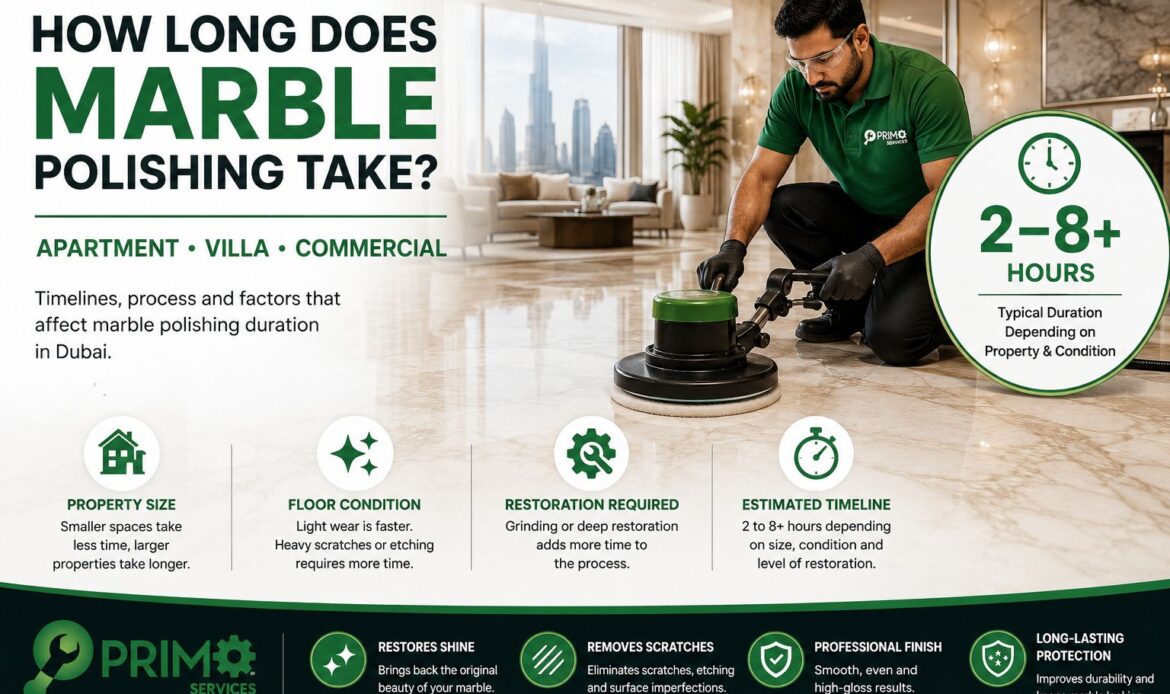
Marble polishing time in Dubai depends on the size of the property, the condition of the stone, the level of furniture movement required and whether the floor only needs polishing or a deeper restoration process. A small apartment may be completed within a working day, while a villa, hotel lobby or commercial floor may need phased work over a longer schedule.
This guide explains how long marble polishing takes in Dubai, what affects the timeline and what property owners should expect before work begins. It is written as a planning guide rather than a general marble polishing service page, so you can understand access, preparation, disruption and realistic working times before arranging an inspection.
Quick Answer
Marble polishing can take from a few hours for a small, lightly worn area to several days for larger villas, offices, hotels or floors that need grinding, honing or detailed restoration. Most timing estimates depend on floor area, marble condition, furniture movement, access and the finish required.
A professional inspection is the best way to confirm the correct marble floor polishing duration because dullness, etching, scratches and stains do not all require the same process.
Marble Polishing Timeline Table
The table below gives practical planning ranges for common Dubai property types. These are general estimates only. Actual timings should be confirmed after inspection because marble condition can change the scope significantly.
| Property Type | Typical Time Range | What Usually Affects Timing |
|---|---|---|
| Studio apartment | 2-5 hours | Small floor area, limited furniture and light surface wear. |
| 1 bedroom apartment | 4-8 hours | Living room, corridor and bedroom access, plus furniture movement. |
| 2 bedroom apartment | 1 working day | More rooms, larger circulation areas and possible uneven wear. |
| Villa | 1-3 days | Larger floor areas, stairs, majlis rooms, entrances and multiple zones. |
| Office | 1-2 days or phased | Working hours, access, furniture, reception areas and staff disruption. |
| Retail unit | After-hours or phased | Customer access, closing windows, drying time and handover requirements. |
| Hotel lobby or corridor | Phased schedule | Guest movement, night work, section-by-section access and finish consistency. |
Typical Marble Polishing Timelines
Marble polishing is not timed only by square metres. Two floors with the same area can take different amounts of time if one is lightly dull and the other has scratches, acidic etching, old coating residue or uneven tiles.
Studio Apartments
A studio apartment with a small marble area and light dullness may often be completed in a few hours. The work is usually faster when furniture is minimal, access is clear and the marble only needs cleaning, polishing and buffing.
Timings increase if the floor has deep scratches near the entrance, stains around the kitchen area or heavy dullness from incorrect cleaning products. If grinding or honing is required, the job should be assessed as restoration rather than simple polishing.
One Bedroom Apartments
A one bedroom apartment commonly includes marble in the living area, entrance, hallway and sometimes the bedroom. The work may take half a day to a full day depending on furniture, floor condition and whether the technician can work continuously.
In Dubai apartments, balcony dust and fine sand often affect the living room and entrance more than other areas. This can create uneven shine, so extra attention may be needed in high-traffic walkways.
Two Bedroom Apartments
Two bedroom apartments usually need more planning because furniture movement, room access and drying or settling time can slow the process. A lightly worn apartment may be completed in one working day, while a heavily etched or scratched floor may take longer.
If the property is occupied, the team may need to work section by section so residents can move safely through the apartment. This can be more practical than clearing the whole floor at once.
Villas
Villa marble polishing often takes longer because villas may include large living rooms, majlis areas, staircases, corridors, bedrooms, entrances and outdoor transition zones. Sand abrasion near doors and garden access points can also increase surface wear.
A villa may need one to three days or more depending on the marble area and restoration level. Staircases, landings and detailed edges often require more careful work than open floor areas.
Offices
Office marble polishing is usually planned around business operations. Reception floors, lift lobbies, corridors and meeting areas may need evening, weekend or phased work to reduce disruption.
Timelines depend on access approvals, furniture, partitions, workstation layout and whether the polished area must be ready before staff or visitors arrive the next day.
Retail and Hotel Areas
Retail units and hotels often require careful scheduling because appearance and access matter. Work may be done outside opening hours, in sections, or behind temporary barriers where appropriate.
Hotels may also need consistent gloss across adjoining areas, corridors and lobby zones. This can make preparation and finishing more detailed than a normal apartment polishing job.
What Affects The Timeline?
The marble restoration timeline depends on several practical factors. Understanding these helps property owners plan realistically and avoid assuming that every floor can be completed in the same number of hours.
Property Size
Larger areas naturally take longer, but layout matters as much as size. A clear open living room is faster to polish than the same square metre area split across bedrooms, corridors, stairs and narrow access points.
Marble Condition
Light dullness is usually faster to improve than a floor with deep scratches, etching, stains or old coating residue. Floors that have been cleaned with harsh chemicals may need additional honing before polishing.
Etching
Etching happens when acidic substances dull the marble surface. Lemon, vinegar, bathroom cleaners and some descaling products can leave pale, flat marks that normal cleaning cannot remove.
Light etching may be improved through honing and polishing. Deeper etching can add time because the affected surface must be refined before gloss can be restored.
Scratches
Fine surface scratches can often be improved during polishing or light honing. Deeper scratches may require a more detailed process, especially if they catch dirt or remain visible under strong light.
If scratches are severe, the technician may recommend restoration before polishing. For more detail on when polishing is needed, see our guide to the signs your marble floors need professional polishing.
Staining
Stains can slow the process because not every stain is removed by polishing. Some marks are absorbed into the stone and may need poultice treatment, stain assessment or a separate restoration method.
If you are unsure whether a mark is etching or staining, our guide on marble etching vs staining explains how to tell the difference.
Grinding Required
Grinding takes longer than polishing because it removes or levels more of the surface. It may be required for uneven tiles, heavy wear, deep scratches, lippage or older marble that has lost surface clarity.
Not every floor needs grinding. A good inspection should separate normal polishing work from more intensive marble restoration.
Furniture Movement
Furniture can add significant time. Sofas, dining tables, beds, cabinets, office desks and reception furniture may need to be moved, protected or worked around carefully.
If furniture cannot be moved completely, the team may polish in stages. This helps protect belongings but can extend the schedule.
Drying and Final Cleaning
Polishing itself is only part of the job. After the main process, the floor may need cleaning, buffing, edge checks and time before full use. Any protective treatment may also have product-specific guidance.
Access and Approvals
Apartments, offices, hotels and managed buildings may require access coordination. Service lift bookings, parking, security approval, work permits and restricted working hours can all affect the final timeline.
Number of Technicians
A larger team may complete some stages faster, especially in villas or commercial properties. However, some steps still need careful sequencing, machine access and finishing time.
Marble Polishing vs Marble Restoration
Marble polishing and marble restoration are related, but they are not the same. Polishing is usually suitable when the floor is dull, lightly scratched or losing reflection but the surface is generally even and stable.
Restoration takes longer because it may involve grinding, heavier honing, stain treatment, deeper scratch reduction, edge work or correcting previous maintenance mistakes. It is more detailed because the technician is not only improving shine; they are correcting surface problems before polishing.
| Service Level | Best For | Timeline Impact |
|---|---|---|
| Cleaning | Dirt, residue and normal surface grime | Fastest option, but does not restore worn gloss. |
| Polishing | Dullness, light wear and reduced reflection | Moderate timing depending on area and finish required. |
| Honing | Etching, light scratches and uneven sheen | Adds time before final polishing. |
| Grinding | Uneven surface, deeper scratches or heavy wear | Can significantly extend the project duration. |
| Restoration | Multiple issues such as etching, scratches, stains and worn finish | Longest option and usually needs inspection before scheduling. |
If the material is not marble or if multiple surfaces are involved, start with the restoration services Dubai hub to compare marble, terrazzo, travertine, sandstone, wood and other specialist surfaces.
Step-by-Step Marble Polishing Process
The process below explains why marble polishing time can vary. Some floors move quickly through the sequence, while others need extra preparation or surface correction before final polishing.
1. Inspection
The technician checks the marble type, surface condition, scratches, etching, stains, previous coatings, access and customer expectations. This step helps confirm whether polishing is enough or whether restoration is required.
2. Preparation
The work area is prepared before machines are used. Furniture may be moved or protected, nearby surfaces may be covered and access routes are planned so the team can work safely and efficiently.
3. Grinding If Required
Grinding is only used where the marble condition requires it. It may help level uneven areas or remove heavier damage, but it adds time and should not be included unnecessarily.
4. Honing
Honing refines the surface and can reduce dullness, etching and light scratches. It prepares the marble for the polishing stage by creating a more even surface.
5. Polishing
Polishing improves the stone’s shine, clarity and reflection. The result depends on the marble type, density, previous damage and the finish the stone can naturally achieve.
6. Cleaning
After polishing, residue is removed and the floor is cleaned. Edges, corners and transition areas are checked so the finish appears consistent.
7. Final Inspection
The final inspection checks the appearance, access areas and overall finish. The technician should also explain any limitations, aftercare notes or areas that may need future attention.
How To Prepare Before The Team Arrives
Good preparation can reduce delays and make the work smoother. The goal is not to turn your home or office into a construction site, but to make sure the polishing team can access the marble safely.
- Move small items, loose decor, shoes, rugs and floor mats before the appointment.
- Share photos of the marble condition before booking if possible.
- Tell the team about deep scratches, acidic spills, stains or previous polishing work.
- Confirm parking, service lift access and building approvals where required.
- Keep pets and children away from the work area during the service.
- Discuss whether heavy furniture needs moving or whether work should be phased.
- Ask when the floor can be used normally after the work is complete.
For villas, offices and commercial spaces, planning access is often as important as the polishing itself. Clear access can reduce delays and help the team complete each section properly.
Can You Walk On Marble Immediately?
In many cases, light foot traffic may be possible after the work area has been cleaned and the technician confirms it is safe. However, this depends on the process used and whether any finishing or protective treatment has been applied.
If sealing, crystallization or another finishing stage is used, the technician should provide specific guidance. It may be sensible to avoid dragging furniture, placing rugs or wet mopping immediately after polishing.
For commercial properties, access should be planned carefully. Reception areas, hotel corridors and retail entrances may need phased handover so the floor is not used heavily before the finish is ready.
Dubai Property Examples
A marble floor in a Dubai Marina apartment may take less time than a large villa in Emirates Hills, even if both floors are made from similar stone. The apartment may have fewer rooms and simpler access, while the villa may include stairs, larger reception areas and more furniture movement.
Hotel and office projects are different again. A hotel lobby may need night work or phased sections to keep guest access open. An office reception may need completion outside business hours so the space is ready for staff and visitors the next morning.
These practical differences are why a site assessment is more useful than a fixed online promise. The right schedule should reflect the property, the surface and how the space is used.
Frequently Asked Questions
How long does marble polishing take in Dubai?
Marble polishing can take from a few hours for a small lightly worn area to several days for larger villas, offices, hotels or floors that need grinding, honing or restoration. The exact timing depends on floor size, marble condition, access and the finish required.
Can a marble floor be polished in one day?
Yes, many apartments and smaller areas can be polished in one working day if the marble is accessible and only has light dullness or surface wear. Larger areas or floors with deeper damage may take longer.
How long does villa marble polishing take?
Villa marble polishing may take one to three days or more depending on the floor area, staircases, furniture movement, marble condition and whether grinding or restoration is required.
Does marble restoration take longer than polishing?
Yes. Marble restoration usually takes longer because it may include grinding, honing, deeper scratch reduction, stain treatment or correction of previous surface damage before polishing can be completed.
What makes marble polishing take longer?
Marble polishing takes longer when the floor has deep scratches, etching, stains, uneven tiles, old coating residue, heavy furniture, restricted access or a larger surface area.
Can I stay in the property during marble polishing?
In many residential properties, occupants can remain on site if work areas are separated and access is managed. The team should explain which areas to avoid while polishing, cleaning or finishing is in progress.
Can I walk on marble immediately after polishing?
Light walking may be possible after the technician confirms the area is clean and safe, but this depends on the polishing method and whether any finishing or protective treatment has been applied.
Does furniture movement affect marble polishing time?
Yes. Moving or protecting sofas, beds, dining tables, cabinets, office desks and other furniture can add time. If heavy furniture cannot be moved, the work may need to be completed in sections.
How long does commercial marble polishing take?
Commercial marble polishing depends on the area, working hours, access approvals and whether the work must be phased. Offices, retail units and hotels may require evening, weekend or section-by-section scheduling.
Do all marble floors need grinding before polishing?
No. Grinding is only needed when the marble has uneven areas, deeper scratches, heavy wear or surface problems that polishing alone cannot correct. A professional inspection should confirm whether grinding is necessary.
Need a Marble Polishing Timeline for Your Property?
Share your Dubai area, property type, approximate floor size and clear photos of the marble. Primo can assess whether your floor needs polishing, honing or restoration and advise a practical schedule before work begins.