
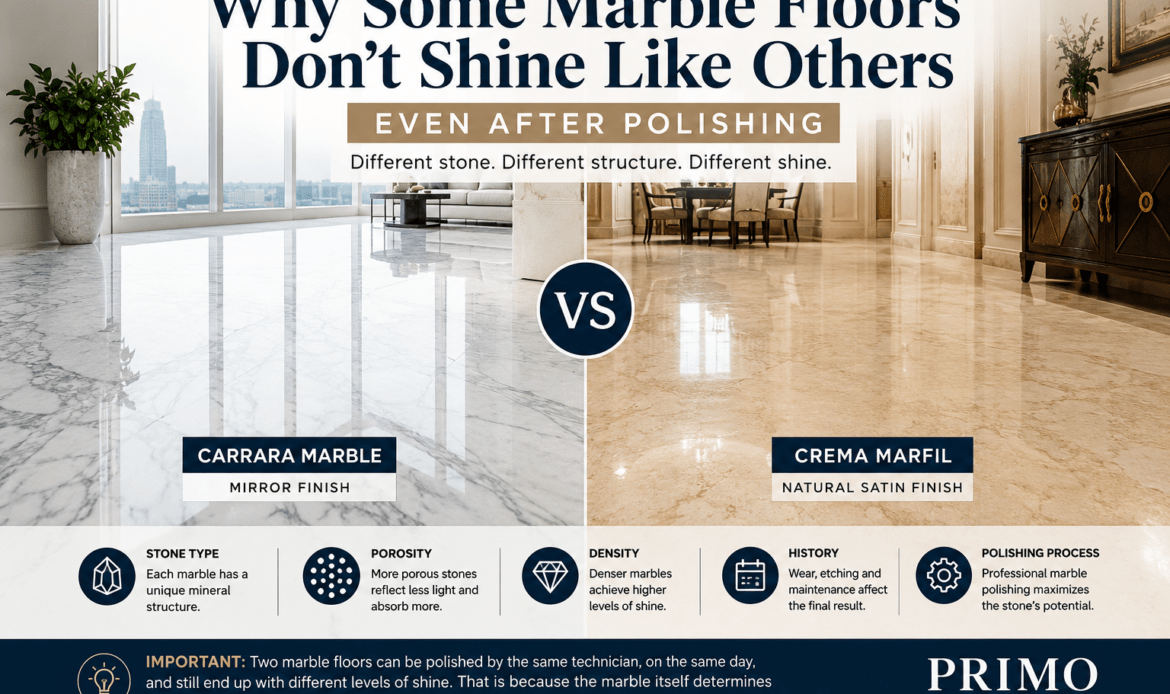
Many Dubai homeowners expect every marble floor to become perfectly reflective after polishing. In some homes, this is realistic. In others, the floor becomes cleaner, smoother and brighter, but it still does not reflect like a mirror because the stone itself has a natural gloss limit.
This does not always mean the polishing has failed. Marble is a natural stone, and every slab has its own density, mineral structure, porosity, colour depth and history of wear. Some stones naturally hold a very high gloss, while others produce a softer satin finish even after careful restoration.
Understanding this difference helps homeowners set realistic expectations before starting professional marble polishing in Dubai, marble restoration or wider natural stone restoration services.
Why Marble Floors Do Not All Polish the Same Way
Marble is formed naturally under heat and pressure. Because it comes from different quarries, countries and geological conditions, one marble can behave very differently from another during polishing.
Two floors may both be sold as marble, but their mineral composition, crystal size and hardness can vary significantly. One may respond quickly to diamond polishing and produce a deep reflection. Another may absorb more, scratch more easily or scatter light across the surface, creating a softer appearance.
Quarry, Country and Stone Structure Matter
Marble from different countries and quarries often has different visual and technical characteristics. Italian white marbles, Spanish beige marbles, Greek marbles, Turkish stones and regional beige or fossil-rich stones may all respond differently to polishing.
The main factors include density, porosity, crystal structure, veining, mineral variation and fossil content. Denser stones usually hold a sharper reflection. Softer or more porous stones often produce a warmer, less mirror-like finish.
Softer and More Porous Marble Usually Has a Softer Shine
Softer marble is easier to scratch and etch. It can still look beautiful, but it may not deliver the same sharp reflection as a denser polished stone. More porous marble can also absorb moisture, cleaning chemicals and stains more easily, which affects clarity.
In Dubai villas and apartments, beige marble is common because it suits warm interiors. However, many beige stones naturally produce a softer, creamier finish rather than a glass-like shine.
Real Dubai Examples: Why Two Marble Floors Can Look Different
In Dubai, it is common to see very different polishing results from one property to another. Many villas in Emirates Hills, Arabian Ranches and Palm Jumeirah use beige marble such as Crema Marfil or similar warm-toned stones. These floors can look elegant after restoration, but they may naturally produce a softer satin glow rather than a sharp mirror reflection.
Carrara, Calacatta and Statuario are often found in newer luxury apartments, penthouses, bathrooms and premium villa interiors. When the stone is dense and the surface condition is good, these marbles usually have stronger reflection potential.
Older villa floors may also have years of sand abrasion, acidic cleaning marks, uneven wear and previous repair work. Even if the stone originally had good polishing potential, the final shine can be affected by its maintenance history.
Polishing Quality vs Natural Stone Characteristics
A professional marble polishing job should improve smoothness, reduce surface dullness where possible, improve reflection and make the floor easier to maintain. But polishing cannot change the stone into a different material.
If the marble is naturally soft, porous, heavily veined or fossil-rich, the final finish may still appear satin compared to high-density marble. This is normal and should be explained before work begins.
Marbles That Often Achieve a High Shine
Some marble types are known for achieving a strong polish when they are properly restored and maintained. Results still depend on condition, but these stones often have better mirror-shine potential during marble polishing Dubai projects:
- Carrara: A classic Italian marble that can polish well when properly honed and finished.
- Calacatta: Often dense and visually striking, with strong reflection potential.
- Statuario: A premium white marble that can achieve a refined high-gloss finish.
- Nero Marquina: A black marble where polishing can create strong contrast and reflection.
How Different Marble Types Respond to Polishing
Different natural stones have different polishing limits. The table below is a practical guide, but the actual result still depends on the condition, age, installation and previous maintenance of the floor.
| Marble or Stone Type | Mirror Shine Potential | Porosity | Common Use in Dubai |
|---|---|---|---|
| Carrara | Excellent | Low to medium | Luxury apartments and bathrooms |
| Calacatta | Excellent | Low | Premium villas and feature floors |
| Statuario | Excellent | Low | High-end interiors and statement areas |
| Nero Marquina | Very high | Low to medium | Feature areas and luxury interiors |
| Crema Marfil | Medium | Medium | Dubai villas and apartments |
| Travertine | Low to medium | High | Outdoor areas, walls and feature surfaces |
| Limestone | Low | High | Traditional interiors and softer natural finishes |
Some Marble Was Designed to Be Honed
Not every marble floor was originally installed with a polished finish. Many architects and interior designers intentionally choose a honed finish for practical reasons:
- It gives the stone a softer appearance.
- It hides fine scratches more effectively.
- It can offer better slip resistance than a high-gloss surface.
In these cases, trying to create a mirror shine may not match the original design intent of the floor. A professional assessment should identify whether the marble was designed for a polished, honed or satin finish before recommending the restoration method.
Marbles That Often Have a Softer or Satin Appearance
Some marble types naturally produce a warmer, softer finish. This does not mean they are poor-quality stones. It simply means their structure reflects light differently.
- Crema Marfil: A popular beige marble that often has a softer, warmer shine.
- Some beige marbles: May contain more variation and porosity.
- Fossil-rich marbles: Can polish unevenly due to natural inclusions.
- Older villa marble floors: May have years of wear, etching and previous repairs affecting reflection.
How Other Stone and Floor Materials Respond to Polishing
Homeowners sometimes refer to different surfaces as marble even when the floor is actually travertine, limestone, terrazzo or engineered stone. Each material responds differently.
Travertine
Travertine is more porous than many marbles and naturally contains holes or voids. It can be honed and polished, but it often gives a softer, more natural finish. For porous stone with worn areas, travertine restoration may be more appropriate than treating it like standard marble.
Limestone
Limestone is usually softer and more porous. It often looks best with a honed or satin finish rather than a strong mirror shine. Trying to force a high-gloss finish on limestone may not produce a durable or consistent result.
Terrazzo
Terrazzo is a composite surface made with marble, stone or glass chips set into cement or resin. It can polish very well, but results depend on the binder, chip content, age and previous maintenance. In many cases, terrazzo polishing follows a different process from natural marble.
Engineered Stone
Engineered stone is not restored the same way as natural marble. Some engineered surfaces can be polished lightly, while others require manufacturer-specific care. Using the wrong method can damage the surface.
Can a Sealer Make Marble Shinier?
This is one of the most common misconceptions about marble care. A sealer is designed to help protect marble from absorbing stains. It does not create gloss in the same way that honing and polishing do.
If a marble floor looks dull because of scratches, etching or surface wear, applying sealer will not make it look like a mirror. The surface usually needs the correct mechanical restoration process first, such as honing, polishing or deeper marble polishing depending on the condition.
Sealer can be useful after marble restoration, especially for more porous stones, but it should be seen as protection rather than a shine treatment.
Myth: More Polishing Always Means More Shine
More polishing does not always mean a better result. Every stone has a natural polishing limit. Once the marble reaches that limit, continuing to polish may not make the floor glossier.
In some cases, unnecessary polishing can create heat, uneven results or avoidable wear on softer stone. A professional technician should understand when the floor has reached its best realistic finish instead of trying to force a mirror shine onto a material that cannot naturally hold one.
Other Factors That Affect the Final Shine
Even when the stone has good polishing potential, the existing condition of the floor can limit the final result.
Previous Damage
Years of scratches, foot traffic, sand abrasion and dragging furniture can wear down the surface. If damage is deep, the floor may need grinding or honing before polishing.
Deep Etching
Acidic cleaners, vinegar, lemon, bathroom chemicals and spills can create dull marks on marble. Light etching can often be improved, but deep etching may require more intensive restoration.
Incorrect Repairs
Poor-quality filling, mismatched epoxy, uneven patching or previous polishing mistakes can affect how the floor reflects light.
Poor Installation
Uneven tiles, lippage, hollow spots and poor levelling can interrupt reflection. A mirror shine depends not only on polish but also on surface flatness.
Uneven Wear
Walkways, entrances, kitchen paths and lift lobby areas often wear faster than low-traffic corners. These areas may need extra preparation to achieve a more even finish.
Why Assessment Should Come Before Polishing
An experienced restoration company should inspect the stone before promising a result. This is especially important in Dubai properties where floors may have been exposed to sand, heavy foot traffic, construction dust, strong cleaning chemicals or previous maintenance work.
A proper assessment should identify the type of stone, the level of scratching, the depth of etching, previous repair work, installation issues and whether a mirror shine is realistic for that material.
How Professionals Measure Shine With a Gloss Meter
In some restoration projects, professionals may use a gloss meter to measure how much light reflects from the floor surface. This gives a more objective reading than judging shine by eye alone.
However, gloss readings should still be interpreted based on the stone type. Two marble floors can both be properly polished but produce different gloss meter readings because one stone is denser, less porous or more reflective than the other.
This is why experience matters. A technician should not compare every floor to a perfect showroom sample. The correct question is whether the stone has reached the best finish that is realistic for its material, condition and installation.
What a Realistic Marble Polishing Result Looks Like
A successful marble polishing Dubai result may look different depending on the stone. On some floors, success means a clear mirror reflection. On others, it means a cleaner, brighter, smoother and more even satin finish.
Good results should include improved surface clarity, reduced dull patches, smoother touch, easier cleaning and a more consistent appearance across the room.
Maintenance Tips to Preserve the Highest Possible Shine
Once your marble floor has been polished or restored, daily maintenance plays a major role in keeping the finish looking good.
- Use pH-neutral stone-safe cleaners.
- Avoid vinegar, lemon, bleach and strong bathroom cleaners.
- Use mats near entrances to reduce sand abrasion.
- Clean spills quickly, especially coffee, oil and acidic liquids.
- Use soft pads under furniture legs.
- Avoid dragging heavy items across the floor.
- Schedule periodic maintenance before the floor becomes heavily worn.
Image Suggestions
Useful image ideas for this article include a side-by-side comparison of high-gloss marble and satin-finish beige marble, a close-up of polished Carrara or Statuario marble showing reflection, and a technician inspecting marble before polishing in a Dubai villa or apartment.
- Suggested hero image alt text: High gloss marble and satin finish marble comparison after polishing in Dubai.
- Suggested inspection image alt text: Primo technician inspecting a dull marble floor before marble polishing in Dubai.
- Suggested close-up image alt text: Natural marble surface showing different gloss levels after professional polishing.
Conclusion
If your marble floor does not shine like another floor after polishing, the reason may be natural stone variation rather than poor workmanship. Density, porosity, crystal structure, finish type and previous damage all affect the final gloss.
The best approach is to identify the stone first, inspect the condition and choose a realistic restoration method. This gives homeowners a cleaner, more durable and more honest result than promising a mirror finish on every marble floor.
Not Sure Why Your Marble Floor Still Looks Dull?
Share photos of your floor with Primo on WhatsApp. Our team can help identify whether your marble is suitable for high-gloss polishing, satin finishing or deeper restoration.
Frequently Asked Questions
Can every marble floor achieve a mirror shine?
No. Some marble floors can achieve a very high-gloss finish, while softer or more porous stones may naturally produce a satin finish even after professional polishing.
Does a lower shine mean the marble polishing was poor?
Not always. The final shine depends on the stone type, density, porosity, previous damage and installation quality, not only the polishing process.
Which marble types usually achieve a high shine?
Carrara, Calacatta, Statuario and Nero Marquina often have strong polishing potential when the stone is in suitable condition.
Why does beige marble sometimes look satin instead of glossy?
Many beige marbles, including some Crema Marfil floors, are softer or more porous and may naturally reflect light less sharply than denser stones.
Can deep etching stop marble from shining?
Yes. Deep acid etching can damage the surface and may require honing or restoration before polishing can improve the finish.
Is travertine polished the same way as marble?
Travertine can be honed and polished, but it is more porous and often has a softer natural finish than dense marble.
Can terrazzo achieve a mirror shine?
Terrazzo can often polish well, but the result depends on the binder, stone chips, age, wear and previous maintenance.
Should marble be inspected before polishing?
Yes. Inspection helps identify the stone type, surface damage and realistic finish before restoration work begins.
Can marble sealer make my floor shinier?
No. Marble sealer helps protect against staining, but it does not create gloss. Shine comes from the correct honing and polishing process.
Can all marble be polished to the same gloss level?
No. Every marble has different mineral composition, density and porosity. Two professionally polished floors can have noticeably different levels of reflection, and both results can be correct for their respective stone.
How can I preserve marble shine after polishing?
Use pH-neutral cleaners, avoid acidic chemicals, clean spills quickly, reduce sand at entrances and avoid dragging furniture across the floor.