
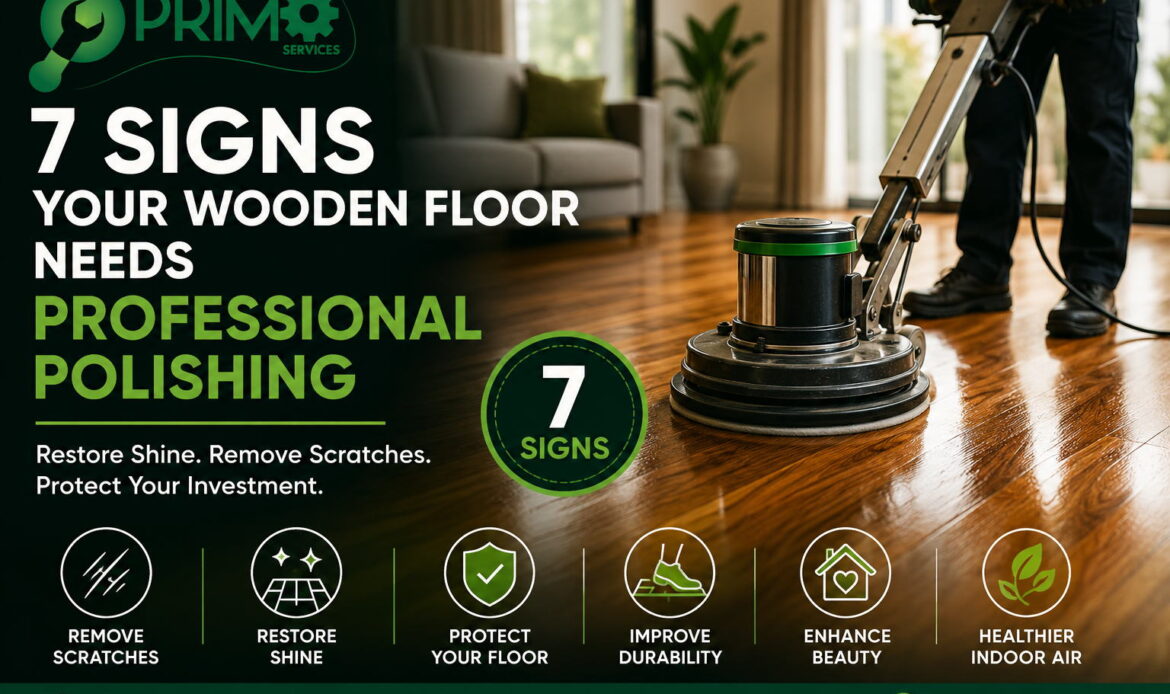
Wooden floors can make an apartment, villa, hotel suite or office feel warmer and more refined, but they also show wear more clearly than many other surfaces. In Dubai, daily foot traffic, fine sand, furniture movement, air conditioning, sunlight and occasional moisture can gradually reduce the shine of timber, parquet and engineered wood floors.
If your floor looks dull, scratched or tired even after regular cleaning, it may be time to consider professional wood polishing in Dubai. Polishing can often refresh the surface finish, improve appearance and help protect the floor, while deeper wear may need sanding or more detailed restoration.
Quick Answer
Your wooden floor may need professional polishing if it looks dull after cleaning, shows visible surface scratches, has uneven shine, or has worn walkways in high-traffic areas. Polishing is usually suitable for light wear and surface-level dullness. Deeper scratches, water damage, loose boards or worn-through protective coating may require sanding or restoration first.
Quick Signs Summary Table
Use this table as a practical starting point. The final recommendation should always depend on the floor type, finish thickness and condition of the wood.
| What You Notice | Likely Issue | Possible Solution |
|---|---|---|
| Fine scratches in sunlight | Surface wear from sand, shoes or furniture | Polishing or light buffing |
| Dull finish after cleaning | Protective finish has lost gloss | Professional polishing |
| Uneven shine between rooms | Different traffic levels or past maintenance | Polishing, and possibly refinishing |
| Worn walkways | High-traffic finish wear | Assessment for polishing or restoration |
| Deep gouges or exposed raw wood | Damage below the surface finish | Sanding or wood floor restoration |
Why Wooden Floors Lose Their Shine
Wood flooring does not usually lose its appearance overnight. The change is gradual. One month the floor looks slightly flat near the entrance; later the same area may look faded, scratched or uneven compared with the rest of the room.
In Dubai properties, the most common causes are practical and everyday:
- Daily foot traffic: Shoes, dust and repeated walking slowly abrade the protective finish.
- Sand and fine dust: Small particles can behave like abrasive grit when walked across the floor.
- Furniture movement: Chairs, sofas, beds and office furniture can leave fine scratches or drag marks.
- UV exposure: Sunlight near balcony doors and large windows can fade the colour or make sheen uneven.
- Moisture: Spills, mopping with too much water or humidity can affect some timber and engineered floors.
- Age of the protective finish: Even well-maintained floors need periodic care as the surface coating wears down.
Cleaning removes dirt from the surface. Polishing improves the appearance of the finish. Restoration deals with deeper wear, damage or surface failure. Choosing the right level of work matters because not every dull wooden floor needs sanding.
7 Signs Your Wooden Floor Needs Professional Polishing
The signs below are written for Dubai homes and commercial interiors where wood, parquet and engineered timber floors are used in living rooms, bedrooms, corridors, offices, retail areas and hospitality spaces.
1. Surface Scratches Are Becoming Noticeable
Fine scratches are one of the first signs that the top finish is wearing down. You may notice them when sunlight comes through a balcony door, under ceiling lights, or when looking across the floor from a low angle.
These marks are often caused by sand, shoes, pets, furniture movement, dining chairs or office chairs without proper floor protection. In many cases, light scratches sit within the surface coating rather than deep inside the wood.
Professional polishing may help improve the appearance of surface scratches. If the scratches are deep enough to catch a fingernail, the floor may need sanding, filling or a more detailed wood floor restoration process.
2. The Finish Looks Dull or Faded
A wooden floor can be clean but still look dull. This is usually a sign that the finish has lost its gloss or has become microscopically scratched from regular use.
Dullness is common in apartment living rooms, villa corridors, hotel rooms and reception areas where people walk across the same routes every day. Strong sunlight can also make some areas look faded compared with shaded parts of the room.
Polishing is often appropriate when the floor is structurally sound and the dullness is mainly on the surface. If the colour has changed deeply or the coating has worn through, restoration may be required instead.
3. Stubborn Stains Will Not Clean Off
Some marks look like dirt but do not disappear after normal cleaning. This can happen when the surface finish has been weakened, allowing liquid, oil or cleaning residue to sit into the coating or timber.
Common causes include food spills, drink marks, plant pots, pet accidents, cleaning chemicals, shoe marks and moisture from wet mopping. In offices and retail spaces, rubber soles and furniture feet can also leave stubborn marks.
Polishing may improve light marks within the finish. Dark stains, water penetration or blackened timber usually need assessment because the issue may be deeper than the polishable surface.
4. The Shine Looks Uneven Across the Floor
Uneven sheen is a common reason people start searching for wood floor polishing Dubai services. One area may still reflect light, while another looks cloudy or flat.
This often happens when some areas receive heavier use than others. For example, the walkway from the entrance to the sofa, the area beside a bed, the path to a balcony, or the space around an office desk may wear faster than the rest of the floor.
Professional polishing can help create a more even appearance when the finish is still present. If previous repairs, uneven sanding or coating failure caused the difference, a fuller restoration may be needed.
5. Minor Water Marks Are Visible
Wooden floors do not respond well to standing water. Minor water marks may appear as cloudy patches, rings, dull spots or slightly raised areas where moisture has affected the finish.
In Dubai homes, this can happen near balcony doors, bathrooms, kitchens, AC leaks, plant pots or areas cleaned with too much water. In offices, water marks may appear near pantry areas or entrances.
Light water marks may sometimes improve with professional polishing. If the wood has swollen, warped, turned black or lifted at the edges, polishing alone is unlikely to solve the problem.
6. High-Traffic Pathways Are Noticeably Worn
Worn pathways are common in villas, hotel corridors, office entrances and living rooms. The floor may still look good near the walls but appear flat, scratched or greyish in the main walking routes.
This type of wear usually develops because the protective finish has been repeatedly rubbed by shoes, sand and cleaning. Over time, the coating becomes thinner in these areas.
If the finish is only lightly worn, polishing may help. If the worn path has exposed raw timber, changed colour or become rough, the floor may need sanding and refinishing rather than polishing alone.
7. The Floor Looks Old Despite Regular Cleaning
Regular cleaning can keep a wooden floor hygienic, but it cannot rebuild shine when the surface finish is tired. If the floor still looks old after vacuuming and mopping, the issue may be surface wear rather than dirt.
This is especially common in rental apartments, older villas, furnished properties, hotel rooms and commercial interiors where the floor has seen years of use.
A professional inspection can confirm whether polishing is enough or whether the floor needs a deeper restoration approach. This avoids unnecessary sanding where a lighter treatment would be sufficient.
Can Polishing Remove Every Scratch?
Polishing can improve many surface-level scratches, but it cannot remove every type of damage. The result depends on how deep the mark is and whether it sits in the protective finish or cuts into the wood itself.
| Scratch Type | What It Means | Likely Treatment |
|---|---|---|
| Light surface scratches | Marks are mostly in the finish and visible under light. | Polishing or buffing may improve them. |
| Moderate wear | The finish is worn, dull or uneven across traffic areas. | Light sanding, polishing or refinishing may be needed. |
| Deep gouges | The mark cuts into the timber or catches a fingernail. | Repair, filling, sanding or restoration may be required. |
Polishing is not a substitute for structural repair. Loose boards, water-damaged timber, deep cracks, open joints or badly worn coatings need a proper assessment before any finishing work begins.
How Professionals Polish Wooden Floors
A careful timber floor polishing process should start with inspection, not machinery. Different floors respond differently depending on whether they are solid hardwood, parquet, engineered wood, laminate-style flooring, or a previously coated surface.
Inspection
The technician checks the floor type, finish condition, scratches, stains, loose boards, water marks and previous coating. This step helps determine whether polishing is appropriate or whether sanding or restoration is needed.
Surface preparation
Furniture is moved where practical, edges are checked, and the work area is prepared. Fragile items should be protected or removed before the appointment.
Cleaning
Dust, loose debris and surface residue are removed before polishing. This is important because sand or dirt left on the floor can create new scratches during the process.
Light sanding if required
Some floors need light abrasion or sanding before polishing, especially if the finish is uneven or lightly worn. This should be done carefully so the surface is prepared without removing unnecessary material.
Polishing
The floor is polished using suitable pads, machines and products based on the wood type and finish. The goal is to improve the surface appearance without overworking the floor.
Protective finishing
Depending on the floor condition and service scope, a suitable protective finish may be applied. Drying and curing times depend on the product used and the indoor conditions.
Final inspection
The finished floor is checked for consistency, visible marks, missed areas and safe access before the team leaves. The customer should also receive practical aftercare advice.
Wood, Parquet and Engineered Flooring: Why Identification Matters
Not all wooden-looking floors can be treated the same way. Solid hardwood may allow deeper sanding than engineered wood, while parquet needs careful handling because of its small blocks and directional grain.
Engineered wood floor polishing depends heavily on the thickness of the top timber layer and the existing finish. Some engineered floors can be refreshed, while others have limited sanding tolerance.
Correct identification protects the floor. Using the wrong abrasive, product or process can make scratches more visible, damage the coating, or reduce the life of the floor.
Dubai Property Examples Where Polishing Is Commonly Needed
In apartments, wooden flooring often wears fastest around living room seating areas, bedroom entrances and balcony doors. Fine dust from outside, chair movement and regular cleaning can slowly flatten the finish even when the floor is looked after carefully.
In villas, timber and parquet floors may show heavier wear in family living areas, corridors, stair landings and rooms connected to outdoor spaces. Sand carried in from gardens, driveways or pool areas can make the surface look dull faster than expected.
In hotels, offices and retail interiors, polishing is often considered when the floor still looks structurally sound but no longer supports the quality of the space. Reception areas, meeting rooms, corridors and display areas usually need a more planned approach because downtime, access and drying time matter.
When Polishing May Not Be Enough
Polishing is useful for many appearance issues, but there are situations where it is not the correct first step. A reputable technician should explain this before starting work.
- Deep gouges or exposed raw timber may need filling or sanding.
- Loose parquet blocks may need repair before polishing.
- Water-damaged boards may need replacement or restoration.
- Worn-through coating may need refinishing rather than simple polishing.
- Severe unevenness may require sanding or floor repair.
A professional inspection helps avoid over-promising. The right recommendation may be polishing, sanding, refinishing, repair, or in some cases replacement of damaged sections.
How To Keep Wooden Floors Looking Their Best
Good maintenance reduces the need for heavy restoration. The goal is to protect the finish from abrasion, moisture and chemical damage.
- Vacuum or dust mop regularly to remove sand and grit.
- Use entrance mats near doors and balcony access points.
- Fit felt pads under chair legs and movable furniture.
- Avoid soaking the floor with water during mopping.
- Wipe spills quickly, especially near kitchens and dining areas.
- Avoid harsh chemicals, bleach, strong solvents or abrasive pads.
- Use products suitable for the specific wood finish.
- Protect floors from direct furniture dragging during moves.
Dubai apartments and villas often collect fine dust quickly, so frequent dry cleaning is usually more helpful than wet mopping. Too much water can do more harm than good on timber and parquet floors.
Frequently Asked Questions
How often should wooden floors be polished?
Wooden floors are usually polished when the finish starts to look dull, scratched or uneven. Homes may need polishing every few years, while hotels, offices and high-traffic areas may need more frequent assessment.
Can engineered wood be polished?
Some engineered wood floors can be polished, but it depends on the top timber layer, finish type and condition. A professional inspection is important because engineered wood has less sanding depth than solid hardwood.
Can polishing remove scratches from wooden floors?
Polishing can improve light surface scratches and dull marks. Deeper scratches, gouges or exposed timber may need sanding, filling or a more detailed wood floor restoration process.
How long does wood floor polishing take?
The timing depends on the floor area, furniture movement, surface condition and whether light sanding or finishing is required. A small apartment room may take less time than a villa, office or commercial space.
How soon can I walk on the floor afterwards?
This depends on the polishing method and any protective finish used. Light use may be possible sooner for some systems, while coatings can require longer drying or curing time. The technician should give specific aftercare instructions.
Is parquet floor polishing different from hardwood floor polishing?
Yes. Parquet floors are made from smaller wood blocks and may have different grain directions, joints and finish wear. They need careful inspection before polishing or sanding.
Can water marks be removed by polishing?
Minor water marks in the surface finish may improve with polishing. Dark stains, swelling, lifting or water-damaged boards usually need repair or restoration before polishing can improve the appearance.
Should I polish or sand my wooden floor?
Polishing is usually suitable for light dullness and surface wear. Sanding may be needed when scratches are deeper, the finish is worn through, or the floor needs a more complete restoration.
Can wooden floors be polished without moving all furniture?
Some furniture may be moved in stages, depending on the room layout and service scope. Heavy or fragile items should be discussed before the visit so the team can plan the work safely.
Does wood polishing make the floor look new again?
Polishing can refresh the appearance of many wooden floors, but the result depends on the floor type, age, damage and existing finish. It should not be treated as a guarantee that every floor will look brand new.
Need Wooden Floor Polishing in Dubai?
Share your Dubai area, floor type and photos of the worn areas. Primo can review whether polishing, sanding or restoration is the more suitable next step.