
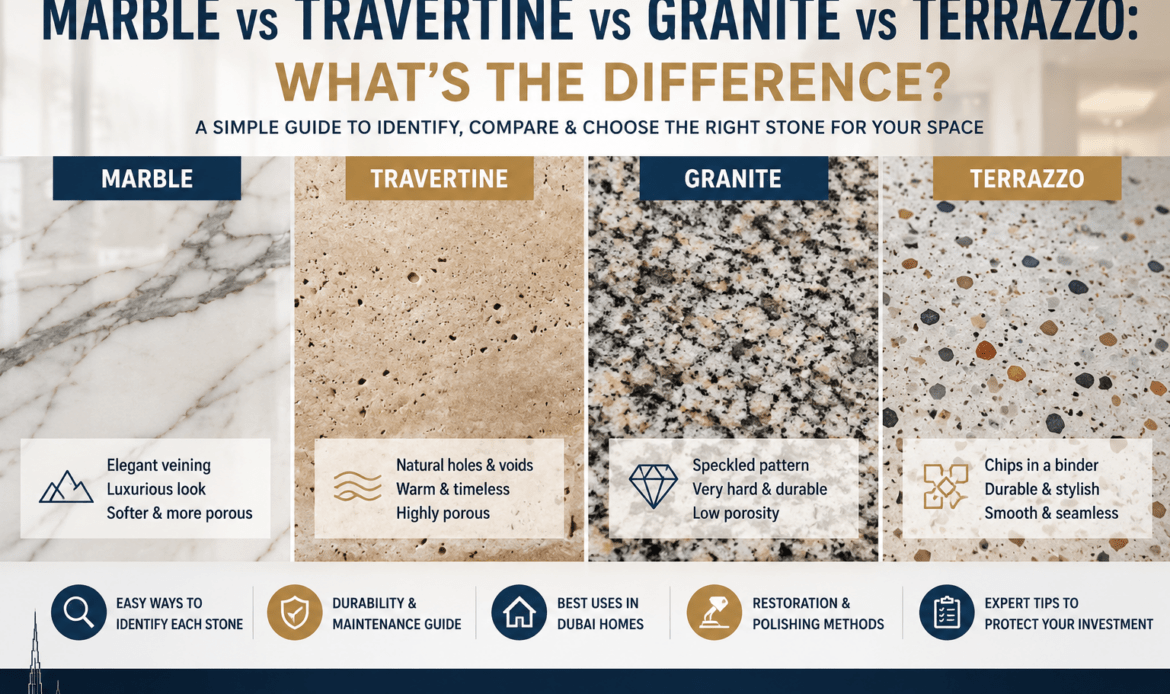
Marble, travertine, granite and terrazzo are all used in Dubai homes, villas, hotels and commercial buildings, but they are not the same material. The main difference is that marble and travertine are natural stones, granite is a harder igneous stone, and terrazzo is a composite surface made from stone chips set into cement or resin. Each surface has a different look, porosity, polishing method and maintenance requirement.
Correct identification matters because using the wrong cleaning chemical, polishing pad or restoration method can leave dull patches, etching, uneven shine or permanent marks. This guide explains how to tell the difference before choosing polishing, honing or restoration work.
Marble vs Travertine vs Granite vs Terrazzo Comparison
| Material | Visual Appearance | Porosity | Durability | Common Restoration Method |
|---|---|---|---|---|
| Marble | Veins, soft movement, natural variation | Medium to high | Durable but sensitive to acids | Grinding, honing, polishing or crystallization |
| Travertine | Holes, pits, earthy tones, linear patterns | High | Good when filled and sealed properly | Cleaning, filling, honing, polishing and sealing |
| Granite | Speckled crystals, dense granular pattern | Low to medium | Very hard and resistant | Specialist polishing with diamond abrasives |
| Terrazzo | Stone chips in cement or resin base | Varies by binder and finish | Highly durable in high-traffic areas | Grinding, honing, polishing and sealing |
How to Identify Marble
Marble usually has flowing veins, soft colour movement and a more elegant natural pattern than granite. In Dubai villas and apartments, marble is often found in entrance halls, living rooms, staircases, bathrooms, lift lobbies and hotel interiors.
Common marble colours include white, beige, cream, grey and darker tones with visible veining. The surface can look glossy when polished, but it can also become dull in traffic lanes or near entrances where sand and dust are walked across the floor.
Marble Hardness and Porosity
Marble is strong enough for flooring, but it is softer than granite and more reactive to acidic liquids. Lemon, vinegar, harsh bathroom cleaners and some descaling chemicals can etch marble. Etching appears as a dull, pale or cloudy mark rather than a normal stain.
Because marble can absorb liquids, sealing may be recommended depending on the location and finish. However, sealing does not make marble acid-proof. It mainly helps reduce absorption.
Marble Restoration Method
Professional marble polishing may include cleaning, diamond grinding, honing, polishing and crystallization depending on the condition. Deep scratches, lippage, etching and dullness often require more than surface buffing.
In a Dubai villa, for example, marble near the entrance may need grinding and honing because fine outdoor dust has scratched the surface. In a hotel lobby, polishing may focus on restoring clarity and an even shine without disrupting operations for too long.
How to Identify Travertine
Travertine is often confused with marble, but it has a more porous structure. The easiest visual clue is the presence of natural holes, pits or filled voids. Travertine is commonly beige, cream, tan or warm grey, and it may show linear bands or cloudy movement.
In Dubai properties, travertine is often used in villa floors, wall cladding, bathrooms, poolside areas, terraces, entrance steps and feature walls. It can create a warm natural look, but it needs correct maintenance because the holes and pores can collect dirt if the filler or sealer fails.
Travertine Hardness and Porosity
Travertine is softer and more porous than granite. It can be durable when installed, filled and sealed correctly, but open holes, loose filler and moisture exposure can make the surface look aged quickly.
Because of Dubai’s dust, humidity and heavy indoor-outdoor movement, travertine near entrances or garden access points can show darkened pores, worn filler and uneven finish. This is especially common in villas and outdoor-adjacent spaces.
Travertine Restoration Method
Travertine restoration usually involves cleaning, removing loose filler where practical, refilling suitable holes, diamond honing, polishing or creating a honed finish, and optional sealing.
A villa corridor with dull travertine may only need honing and polishing, while a terrace or entrance area with open holes may need filling before the final finish. The restoration method should always be selected after checking whether the holes are natural, failed filler or deeper damage.
How to Identify Granite
Granite has a speckled, crystalline appearance. Instead of long flowing veins, it usually shows small mineral grains distributed throughout the slab. It often feels harder and denser than marble or travertine.
In Dubai properties, granite is commonly found in kitchen countertops, vanity tops, reception counters, stair treads, outdoor cladding and some commercial flooring. It is popular where durability is important.
Granite Hardness and Porosity
Granite is generally harder and less porous than marble and travertine, although porosity can vary between types. It resists scratching and acids better than marble, but it is not maintenance-free. Some granite surfaces can still absorb oils or show water marks if unsealed or poorly maintained.
Because granite is very hard, it is not restored in the same way as marble. It requires suitable diamond abrasives, correct tooling and more time. Basic polishing powders used for marble will not usually restore damaged granite properly.
Granite Restoration Method
Granite restoration may include deep cleaning, diamond polishing, stain treatment and sealing where needed. Heavy scratches or dull granite can be difficult to correct without specialist equipment. For countertops, edges and corners also need careful handling to avoid uneven shine.
In a commercial reception area, granite may still look structurally strong but lose clarity from daily cleaning residue. In a kitchen, oil marks or dull patches may need separate stain treatment before polishing is considered.
How to Identify Terrazzo
Terrazzo is not a single natural stone slab. It is a composite surface made from marble, granite, glass or other chips set into a cement or resin binder. The most obvious visual clue is the presence of many small chips across the surface.
Terrazzo is common in older Dubai buildings, commercial corridors, schools, offices, villa floors, staircases and some modern decorative interiors. It is durable and practical, but it can look tired when the surface becomes scratched, stained or uneven.
Terrazzo Hardness and Porosity
Terrazzo durability depends on the binder, chip type and installation quality. Cement-based terrazzo can be more porous than resin-based terrazzo. Both can lose shine in high-traffic areas and may need periodic polishing or sealing.
Because terrazzo contains stone chips, it can often be restored to a cleaner and more reflective finish. However, cracks, hollow sections, deep stains or loose areas may need repair before polishing.
Terrazzo Restoration Method
Terrazzo polishing may include grinding, grout or pinhole treatment, honing, polishing and sealing. In commercial buildings, the goal is often to improve durability, cleanability and visual consistency rather than create a mirror finish everywhere.
For example, an office corridor with heavy foot traffic may need staged grinding and polishing, while an apartment floor with light dullness may only require honing and polishing after cleaning.
Why Correct Identification Matters Before Restoration
Correct identification matters because each surface responds differently to chemicals, abrasives, polishing compounds and sealers. A method that improves marble may not work on granite. A cleaner that seems harmless on porcelain tile may etch marble or travertine. A terrazzo floor may require grinding, while a granite countertop may need a completely different polishing process.
For property managers and hotel maintenance teams, misidentification can create unnecessary cost. If a contractor treats travertine like simple marble, holes may remain open and collect dirt again. If granite is polished with the wrong compound, the result may be uneven or barely visible. If terrazzo is only buffed when it needs grinding, the surface may look better for a short time but quickly return to a dull condition.
Before choosing a restoration method, professionals should inspect:
- The material type and surface finish
- Whether the surface is natural stone or composite
- Depth of scratches, etching and stains
- Existing sealers, coatings or filler
- Indoor or outdoor exposure
- Traffic level and property use
- Access, furniture movement and working hours
If the material is uncertain, it is better to request an assessment through restoration services in Dubai before approving polishing or grinding work.
Where These Materials Are Found in Dubai Properties
Dubai Villas
Villas often use marble in living rooms, staircases and majlis areas. Travertine may appear in entrances, outdoor pathways, terraces or wall cladding. Granite is common in kitchens, outdoor counters and stair edges. Terrazzo may be found in older villas, service areas or renovated spaces where durability matters.
Apartments
Apartment interiors commonly include marble or marble-look finishes in living rooms and bathrooms. Granite is often used for kitchen counters. Terrazzo may appear in older apartment buildings, corridors and shared areas. Travertine is less common inside compact apartments but may appear in premium units or feature walls.
Hotels
Hotels often use marble in lobbies, lift areas and bathrooms because of its premium look. Granite may be used at reception counters, buffet counters and high-use surfaces. Terrazzo can appear in corridors or service areas where durability is important. Travertine may be used in spa areas, walls or selected feature floors.
Commercial Buildings
Commercial buildings often require surfaces that are durable and easy to maintain. Terrazzo is common in corridors, offices and older commercial floors. Granite appears in counters, staircases and entrance details. Marble is used in premium reception areas, while travertine may be used for decorative walls or entrances.
Common Mistakes When Identifying Stone Flooring
Many homeowners and facility teams identify flooring by colour alone. This can be misleading because marble, travertine, porcelain and engineered stone can all appear beige or white. The pattern, pores, hardness and finish are more useful than colour alone.
Common mistakes include:
- Calling all shiny stone “marble”
- Confusing travertine filler holes with damage only
- Assuming granite cannot stain or lose shine
- Thinking terrazzo is natural stone slab
- Using acidic cleaners on marble or travertine
- Requesting polishing when the floor first needs grinding or filling
- Ignoring sealant condition in porous stone
- Comparing indoor polished stone with outdoor weathered stone
Another common issue in Dubai is sand abrasion. Fine outdoor dust can act like a mild abrasive under shoes. This can dull marble, travertine and terrazzo in entrance areas even when the floor is cleaned regularly.
Which Stone Is Best for Dubai Homes?
The best stone depends on where it will be used, the expected maintenance level and the look the owner wants. There is no single best material for every Dubai home.
Marble is suitable when a premium natural appearance is important and the owner accepts periodic polishing and careful cleaning. It works well in formal living rooms, entrances and feature staircases, but it needs protection from acidic spills and abrasive dust.
Travertine works well for warm, natural interiors and selected outdoor-adjacent areas, but it needs proper filling and sealing. It is a good choice when the owner likes a textured, earthy look and understands that holes or filler may need attention over time.
Granite is useful for kitchens, counters and high-use areas where hardness matters. It is more resistant than marble, but restoration is more specialist and it may not provide the same soft luxury look as marble.
Terrazzo is a strong option for high-traffic floors, older buildings, commercial spaces and areas where long-term durability is important. It can be restored through professional grinding and polishing, but cracks or loose areas should be assessed first.
For Dubai villas, marble and travertine are often chosen for appearance, while granite is chosen for practical counters and terrazzo for durability. For hotels and commercial buildings, the best choice is usually the material that balances appearance, maintenance access and traffic level.
Related Restoration Services
Frequently Asked Questions
How can I tell if my floor is marble or granite?
Marble usually has flowing veins and a softer natural pattern, while granite has a dense speckled crystal pattern. Granite also feels harder and is generally more resistant to scratching and acids than marble.
Is travertine a type of marble?
No. Travertine and marble are both natural stones, but travertine is more porous and often has natural holes or filled voids. It requires a different restoration approach from standard marble polishing.
Does terrazzo contain natural stone?
Yes. Terrazzo usually contains marble, granite, glass or other chips set into a cement or resin binder. It is a composite surface rather than a single natural stone slab.
Which stone is easiest to maintain?
Granite and terrazzo are generally easier to maintain in high-use areas than marble or travertine. However, maintenance depends on the finish, sealing, traffic level and cleaning products used.
Which stone is best for Dubai villas?
Marble is popular for premium interiors, travertine for warm natural finishes, granite for counters and practical areas, and terrazzo for durable floors. The best choice depends on location, traffic and maintenance expectations.
Can all stone floors be polished?
Many stone floors can be polished, but not every surface should receive the same method. Deep cracks, loose tiles, failed filler, coatings or moisture problems may need repair before polishing.
How often should natural stone be restored?
Restoration frequency depends on traffic, cleaning methods, dust exposure and the type of stone. Busy entrances, hotel lobbies and commercial areas may need attention more often than low-use residential rooms.
Why does travertine have holes?
Travertine naturally forms with pores and voids. These holes may be left open for a rustic finish or filled for a smoother surface. Over time, old filler can loosen and require restoration.
Is sandstone suitable indoors?
Sandstone can be used indoors in selected designs, but it is more common outdoors or in feature areas. It is porous and should be assessed for sealing, staining risk and maintenance needs.
How do professionals identify stone flooring?
Professionals inspect the pattern, pores, hardness, finish, chip structure, absorption, existing filler and reaction to wear. They also consider where the material is installed and how it has been maintained.
Conclusion
Marble, travertine, granite and terrazzo can all look premium in Dubai properties, but they need different care. Marble is elegant but sensitive to acids. Travertine is warm and natural but porous. Granite is hard and durable but requires specialist polishing. Terrazzo is practical and long-lasting, but it still needs correct grinding, honing and maintenance when worn.
Before approving polishing or restoration, identify the surface correctly and understand what result is realistic. If you are unsure which material you have, Primo can assess the surface and recommend the suitable restoration method.
Need Help Identifying Your Stone Floor?
Share clear photos, your Dubai area and the surface condition. Primo can help identify whether you need marble polishing, travertine restoration, terrazzo polishing or another restoration service.